
The West Seattle Garden Tour celebrated its 30th anniversary this year. The gardens were lovely, and the views were spectacular, but what really inspired me were the small touches accessible to gardeners at all levels. Here are my top takeaways from the tour. I hope they might inspire you in your own garden.
If you’d like, you can click to drop into each section directly.
Pots in the Garden
Pots can serve many different needs in a garden, from creating focal points and highlighting individual plants to adding more plantable space under large trees, on walls, or on hardscaping.
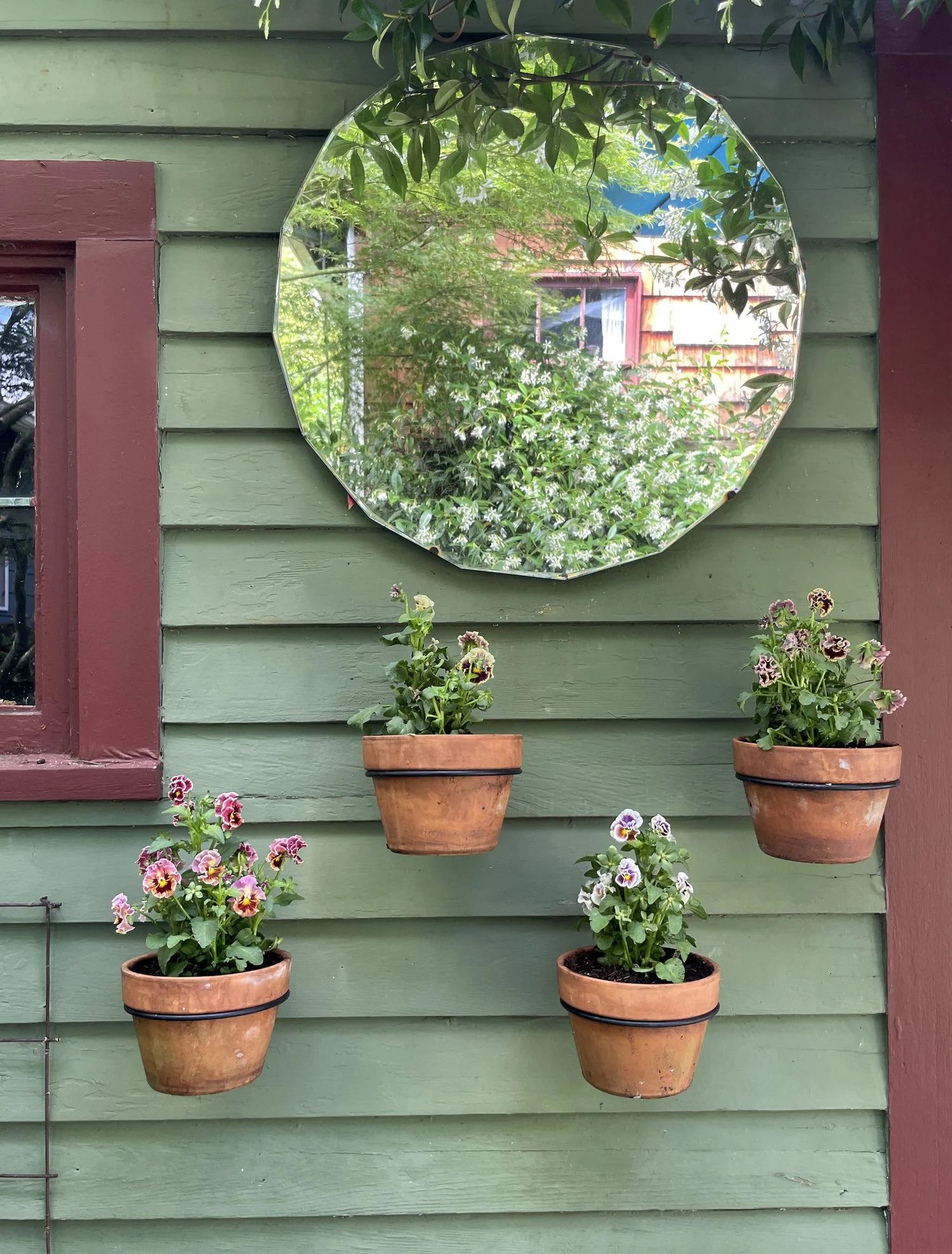
One of the gardens on the tour was called “Small Spaces, Big Moments. This gardener thought creatively about using pots to add plants into a restricted space. For example, fastening rings to a wall creates vertical space, creating a lovely vignette of potted pansies, below. A mirror reflecting trees and an impressive star jasmine adds an anchor to the display.
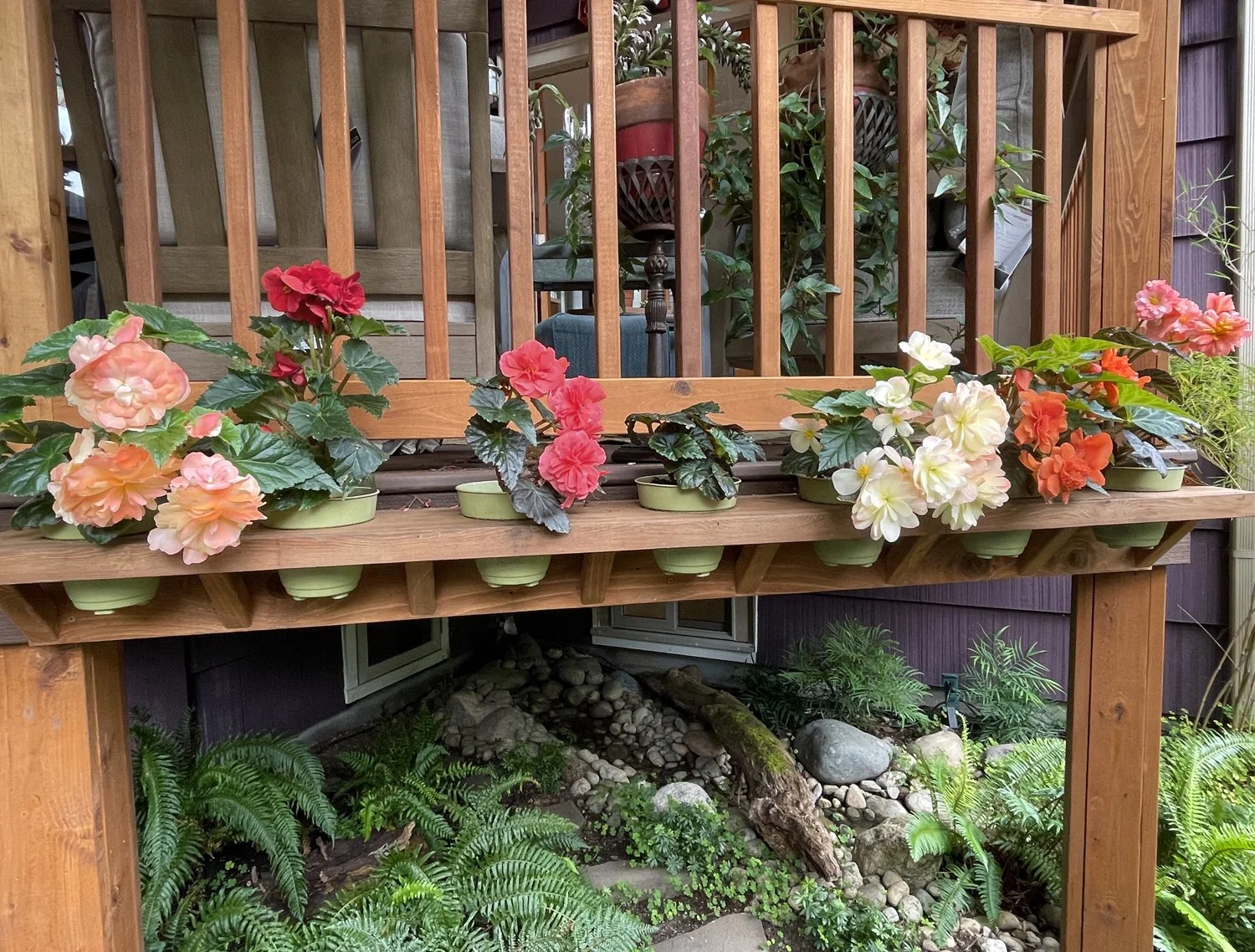
Building a shelf for small pots across the outside edge of a deck offers a unique space to display brightly colored begonias. These annual flowers add summer interest and can easily be swapped out for different plants in other seasons.
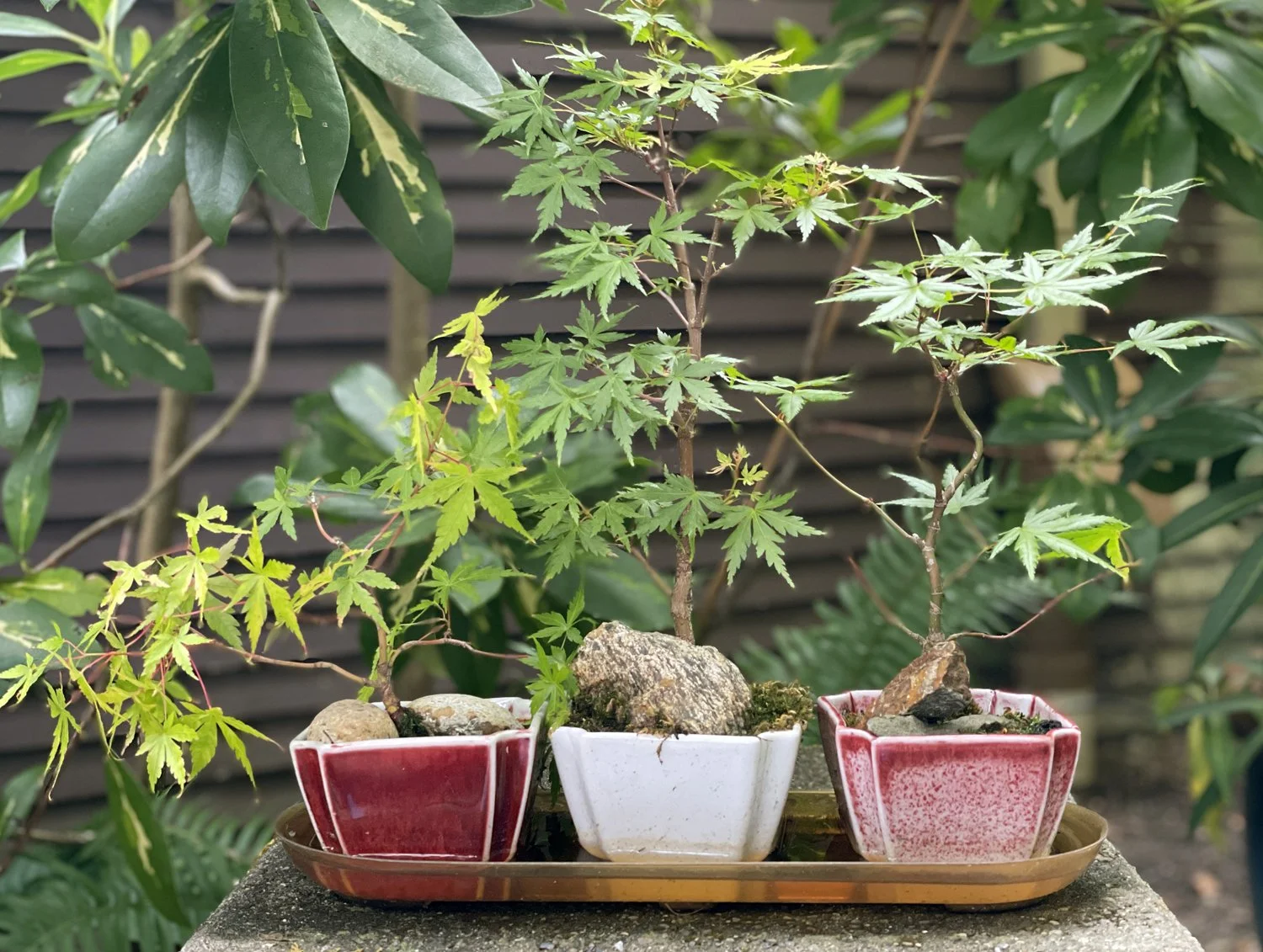
I loved the gentle simplicity of these Japanese maple seedlings in three small pots. The tray is decorative, framing the vignette, and also offers water from below to keep the tiny trees hydrated.
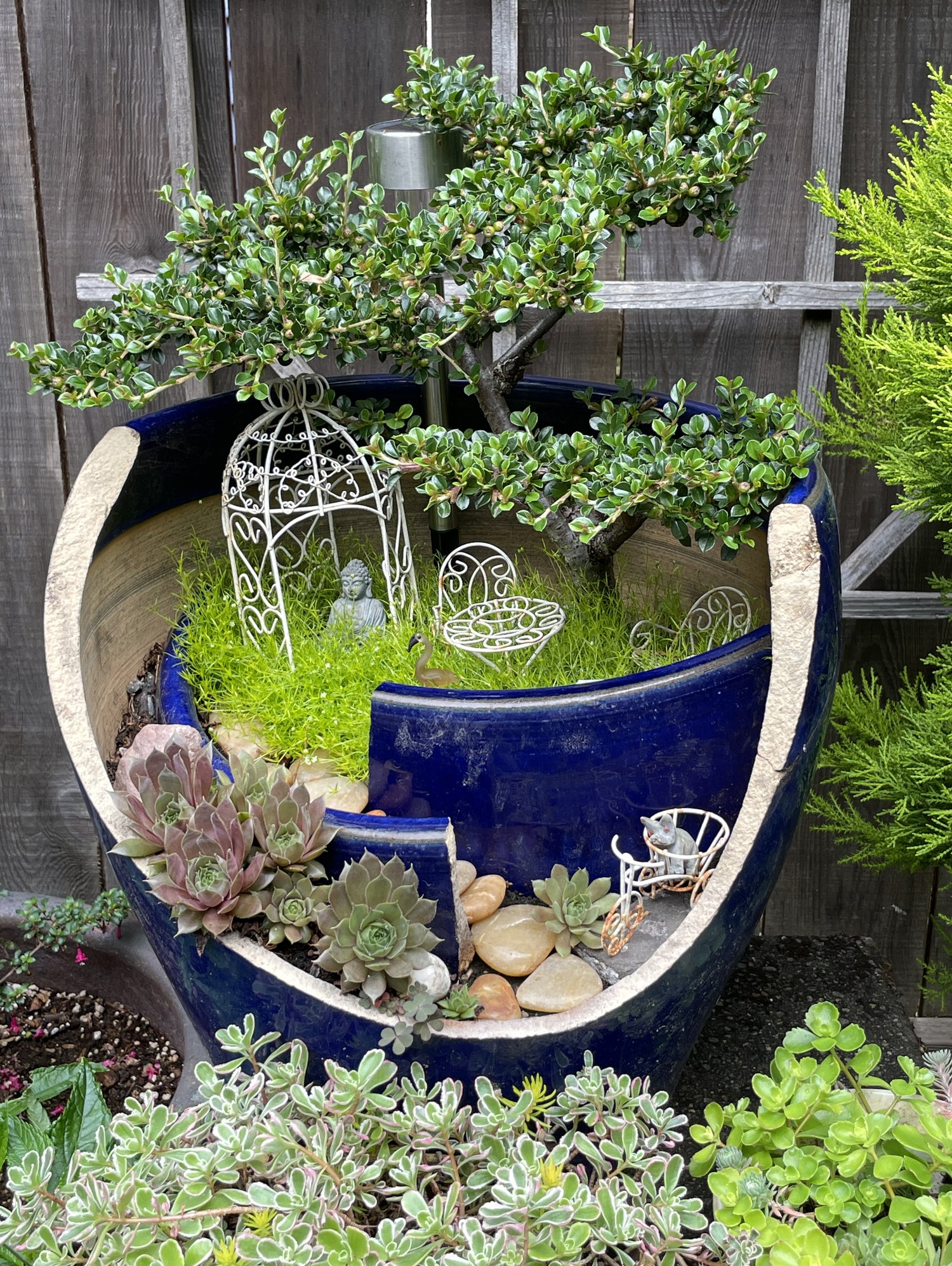
In the same garden, a broken pot in cobalt blue was used to create a bonsai scene starring a Cotoneaster and tiny patio furniture. The moss lawn and succulents tucked into crevices are wonderful details.
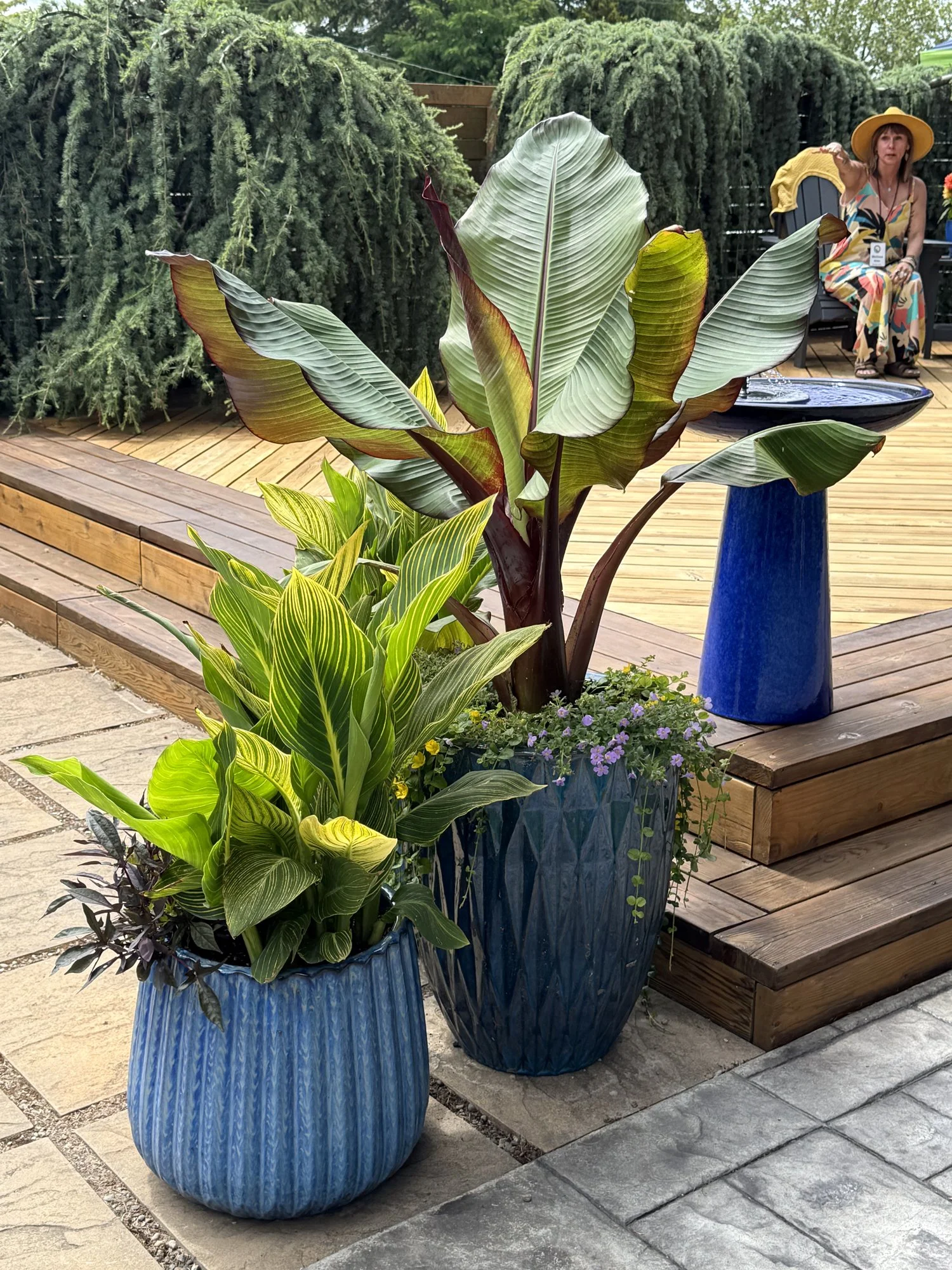
In another garden called “Conifer Corner,” showy tropicals and trailing annual flowers make a statement at the corner of the raised patio. The gardeners confessed they are not “flower people,” and as you would imagine from the garden’s name, most of the space is filled with evergreens. They do, however, enjoy using pots to show off summer flowers and foliage in their front yard.
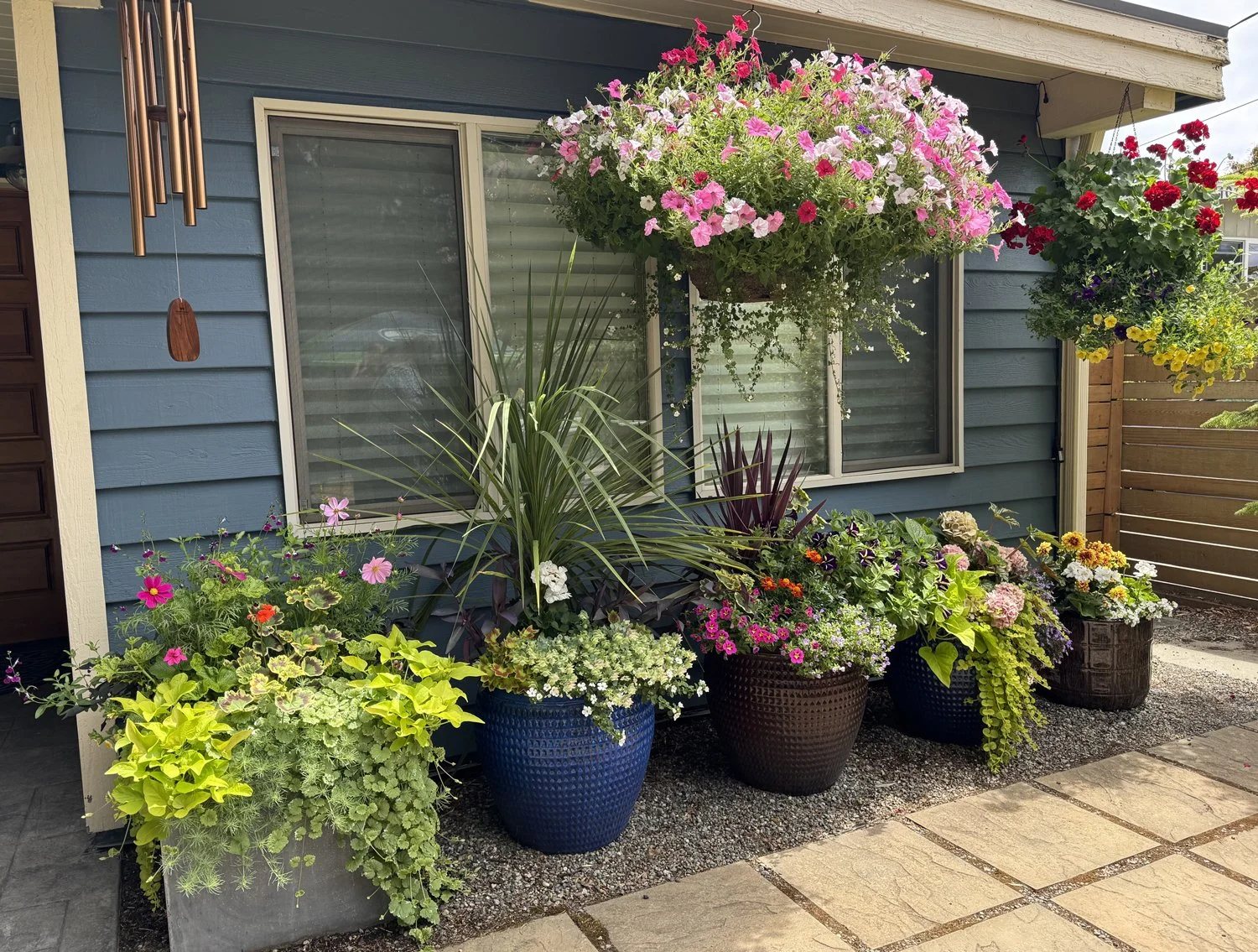
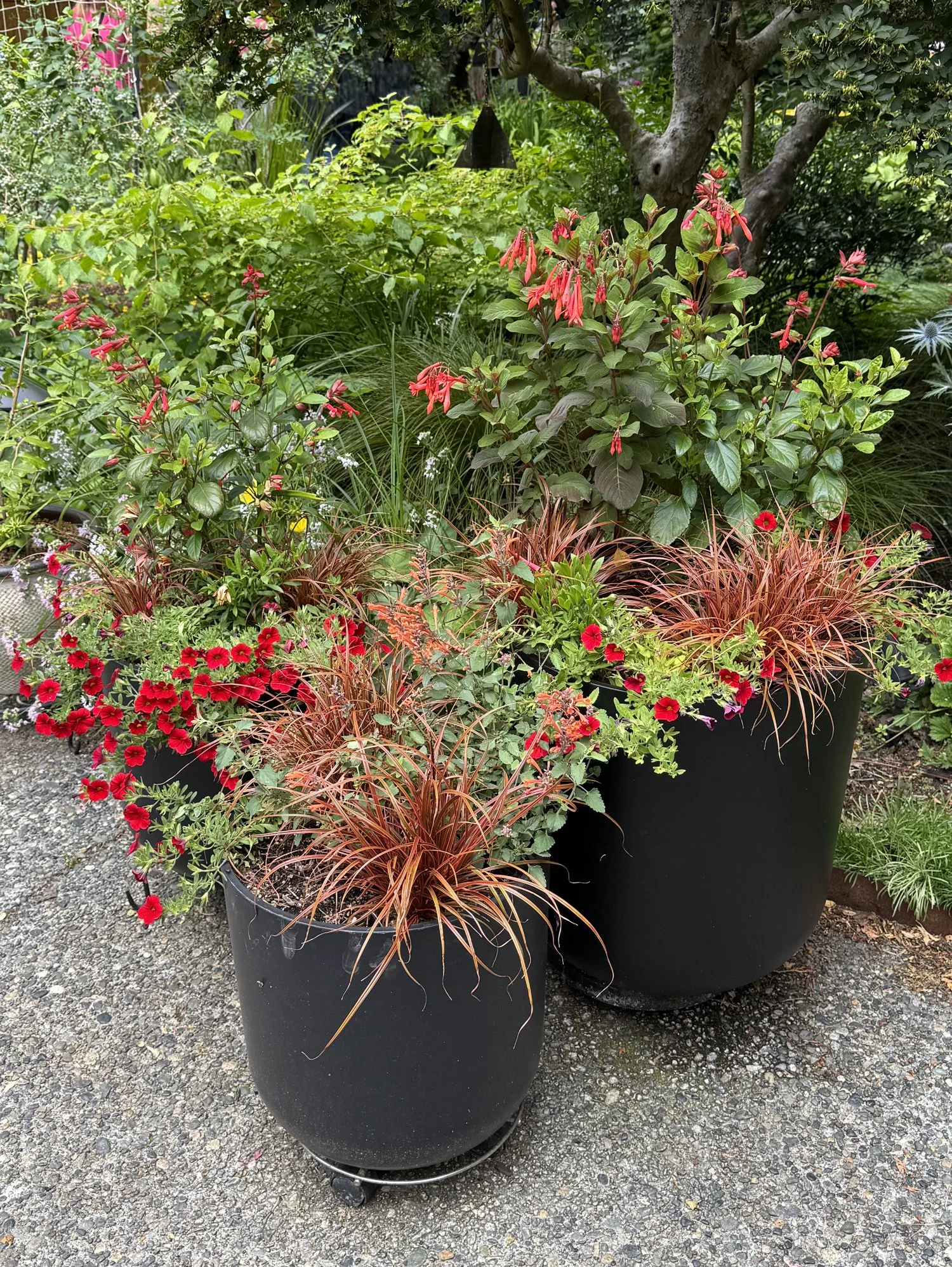
I love the contrast of fiery colors against smooth, dark pots and in the garden below. The repetition of colors and plants unites the display, and the dark pots allow the plants to shine. The ensemble reminds me of a fireworks display.
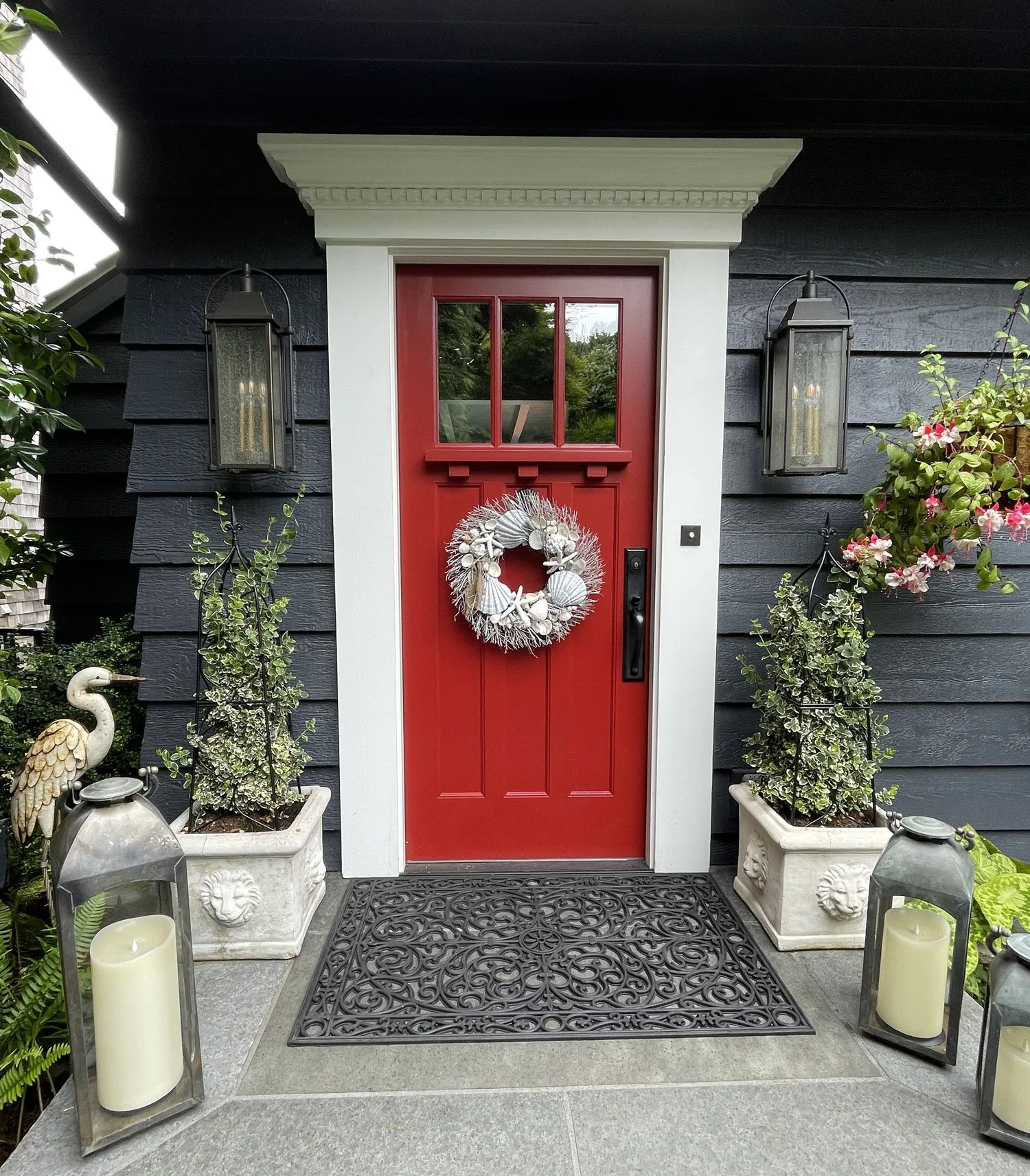
This stunning entryway combines formal elements and unexpected touches. The symmetry of the lion’s head planters with Euonymus and wrought-iron tuteurs, along with hanging lanterns, grounds the bright red door, allowing it to shine.
Water Features
Although waterfalls and streams are awe-inspiring, they aren’t feasible in every garden. The gardens on the tour offered elaborate water features but also simplified ways to incorporate water into the garden.
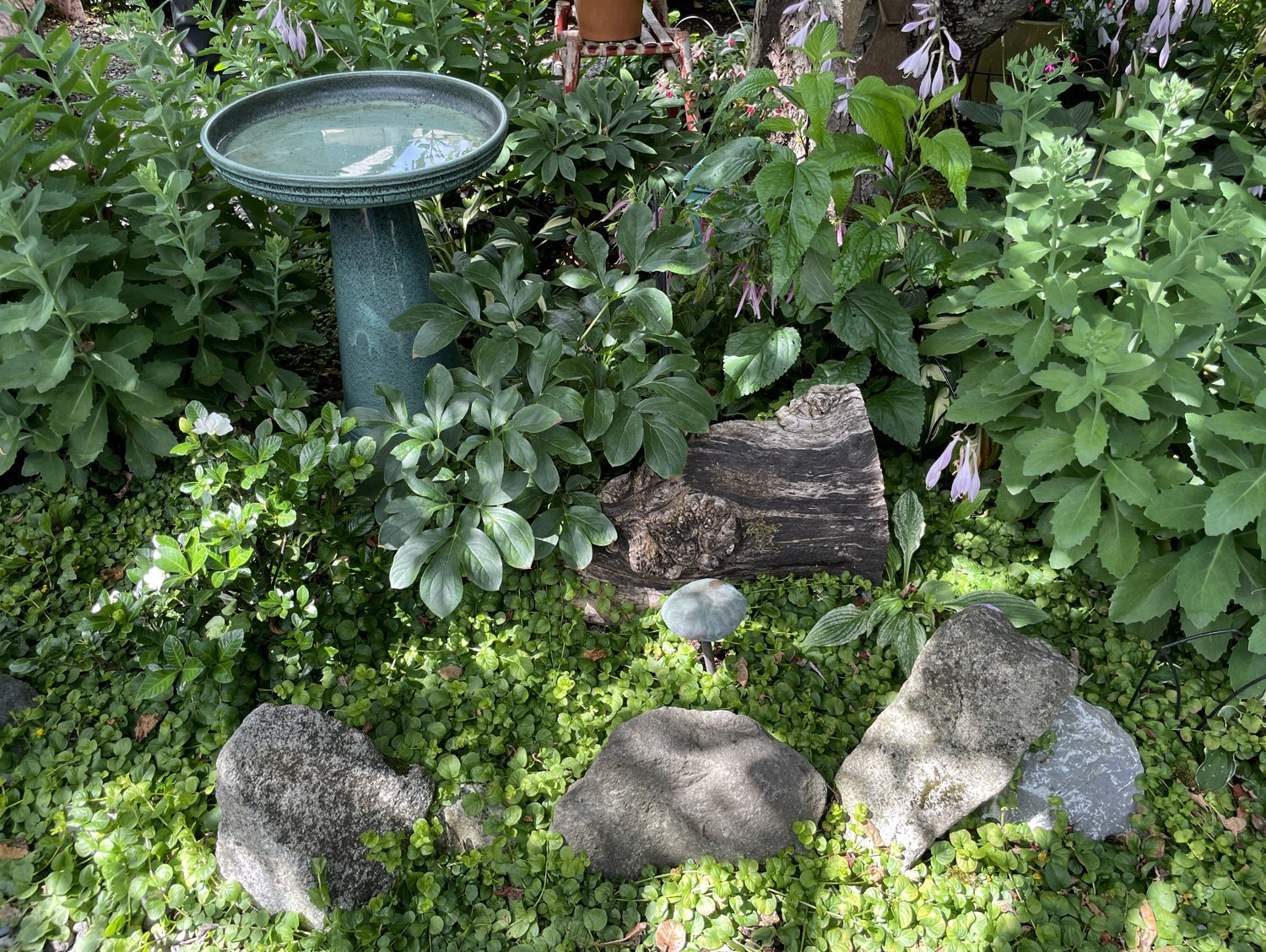
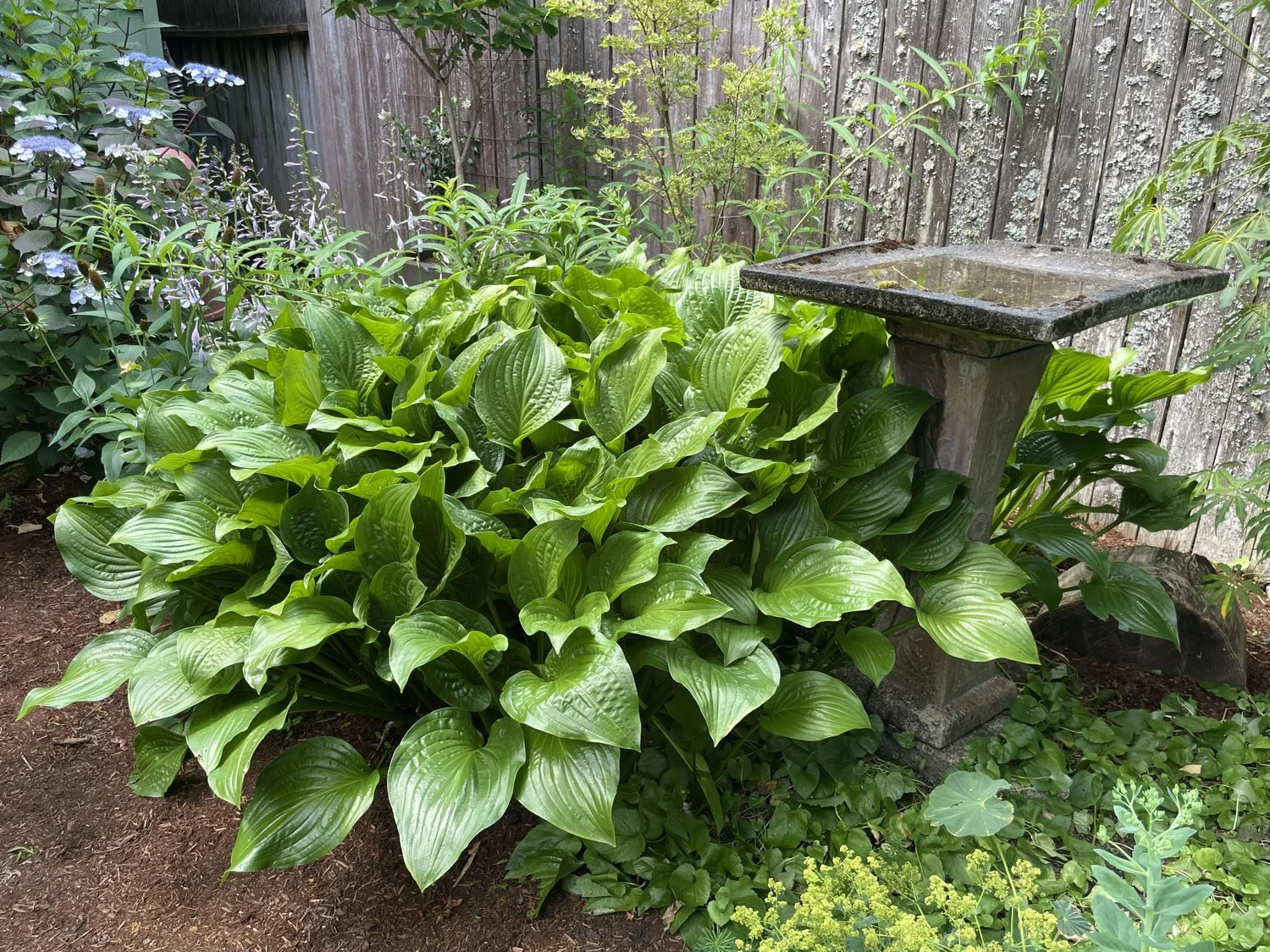
The easiest method? A birdbath that provides fresh water for wildlife while also functioning as a focal point like the two in these gardens, below. Be sure to place your birdbath in the shade to keep the water cool, and add fresh, clean water daily.
Water features are accessible for balcony or patio gardens. This tabletop fountain with water lettuce and Papyrus is perfect for small spaces.
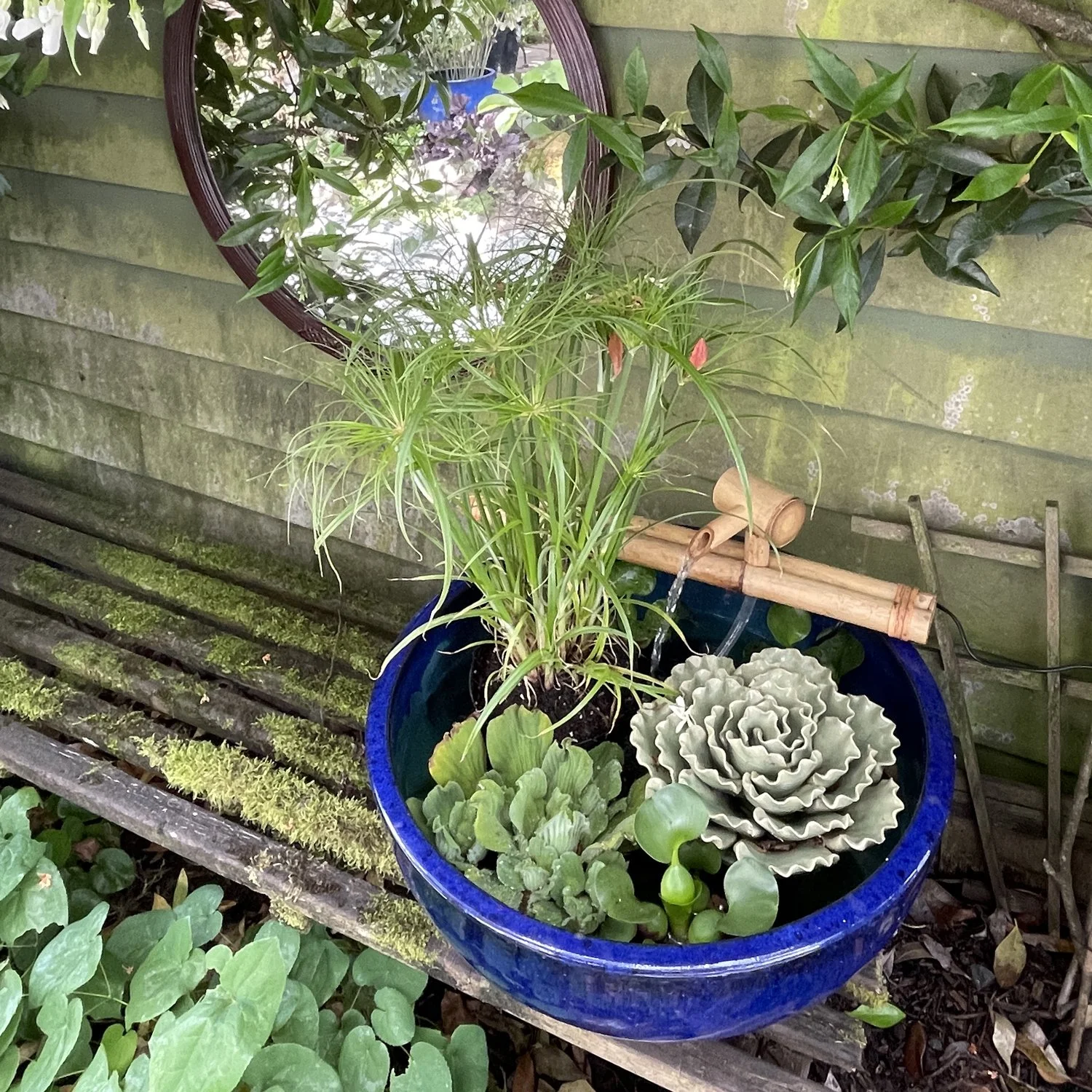
A self-contained fountain takes up a small footprint and recycles water through a bubbler.
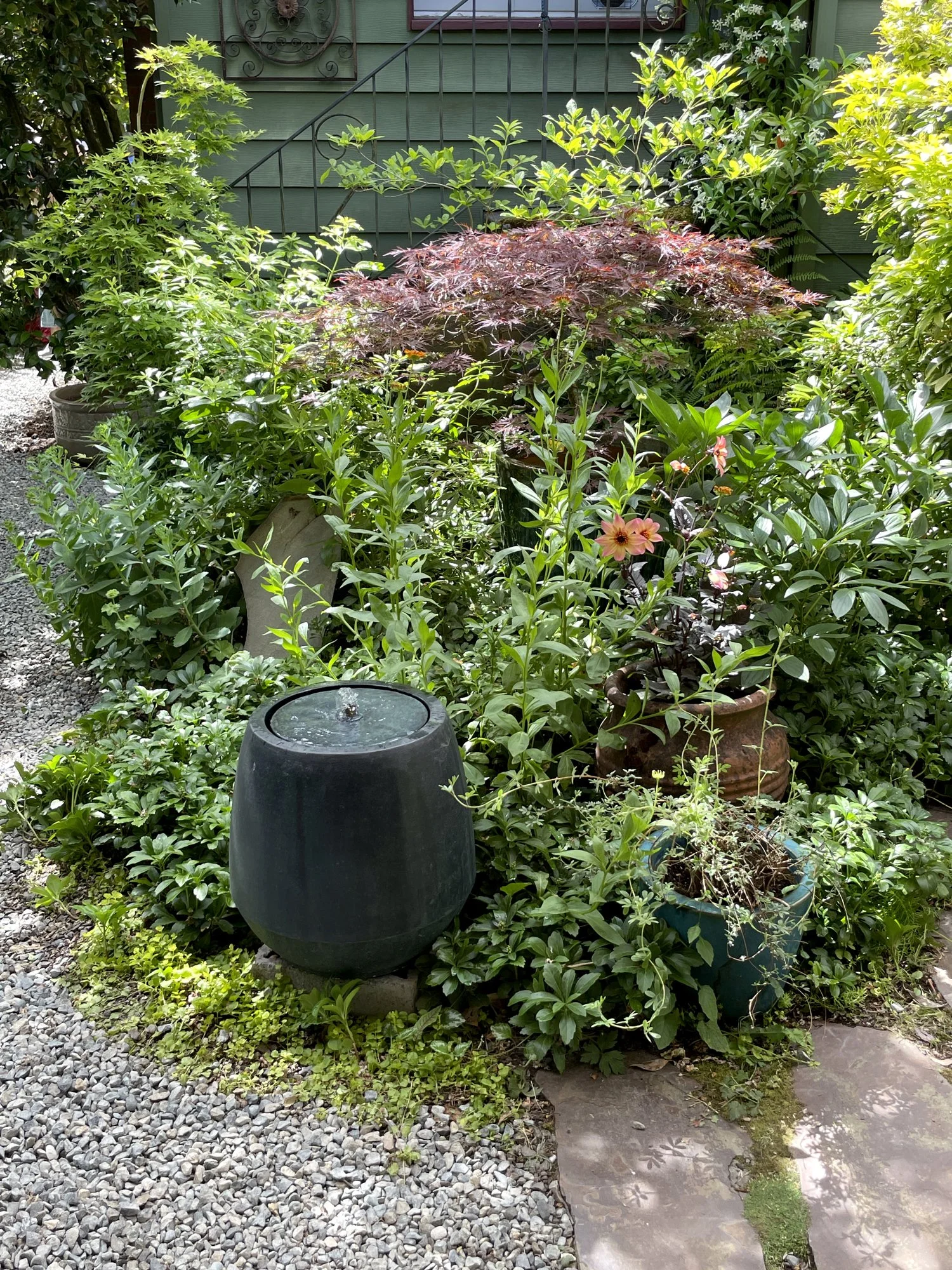
Get creative with your water feature and add personal details, as seen in the two unique fountains below.
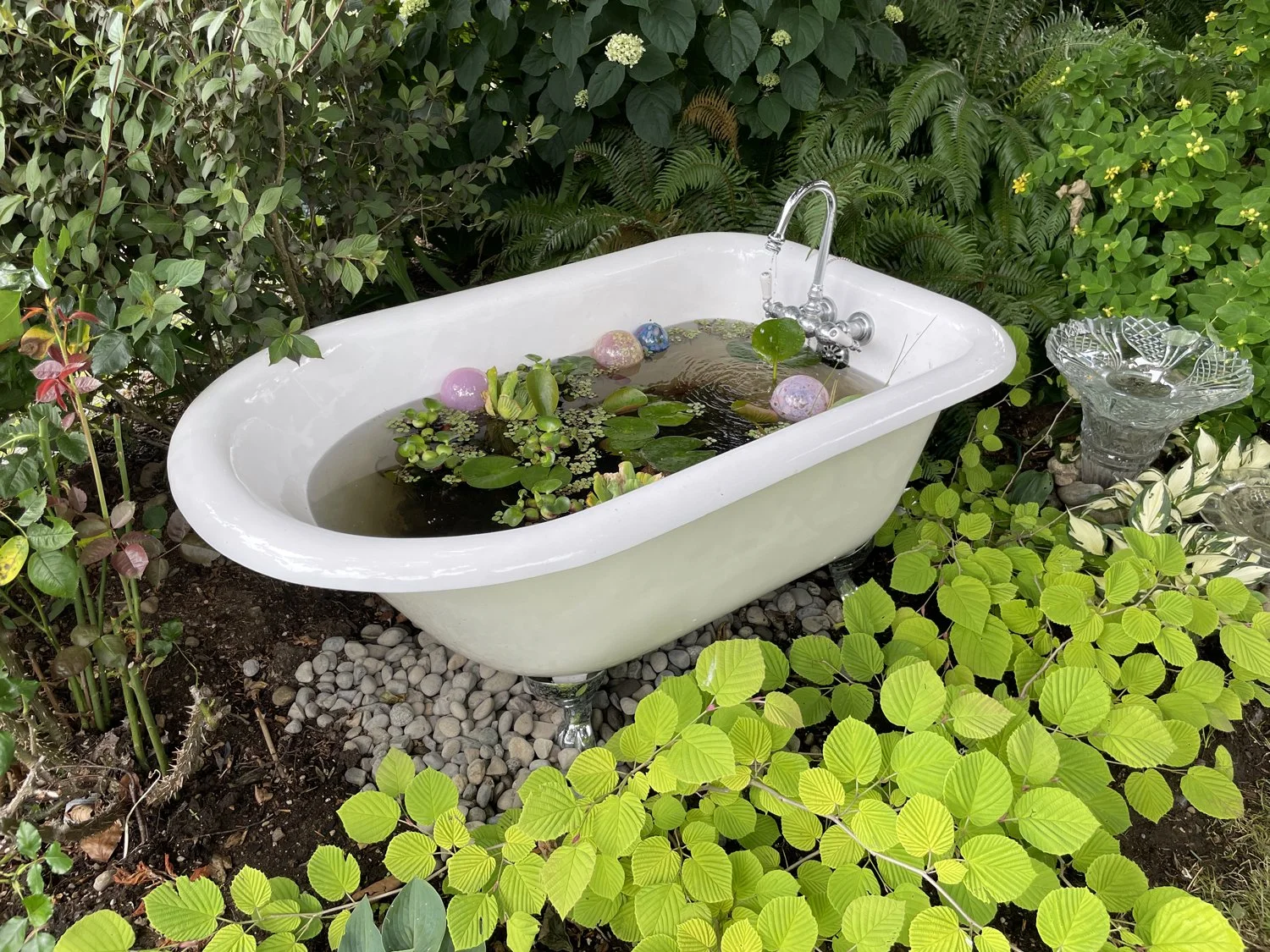
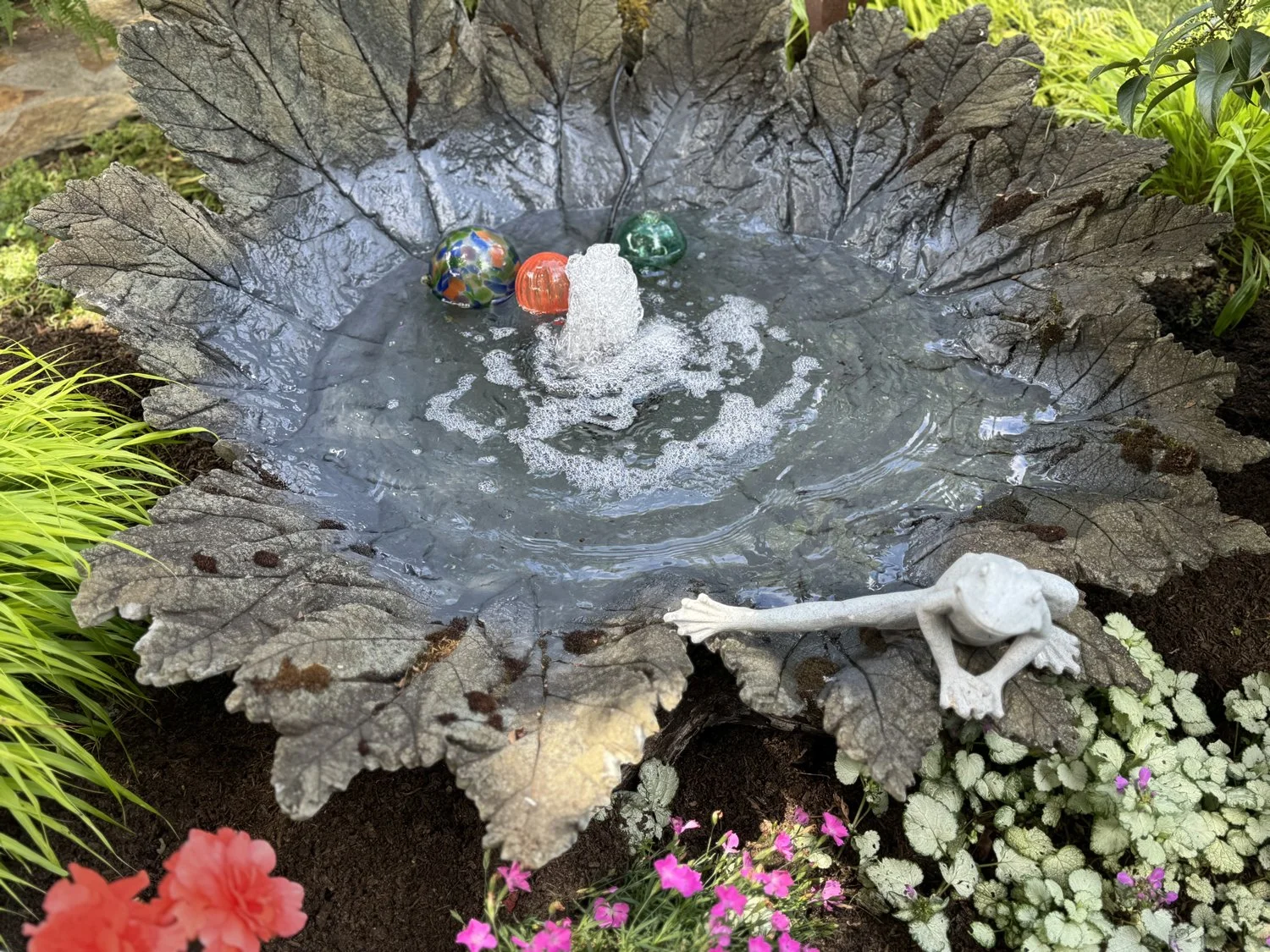
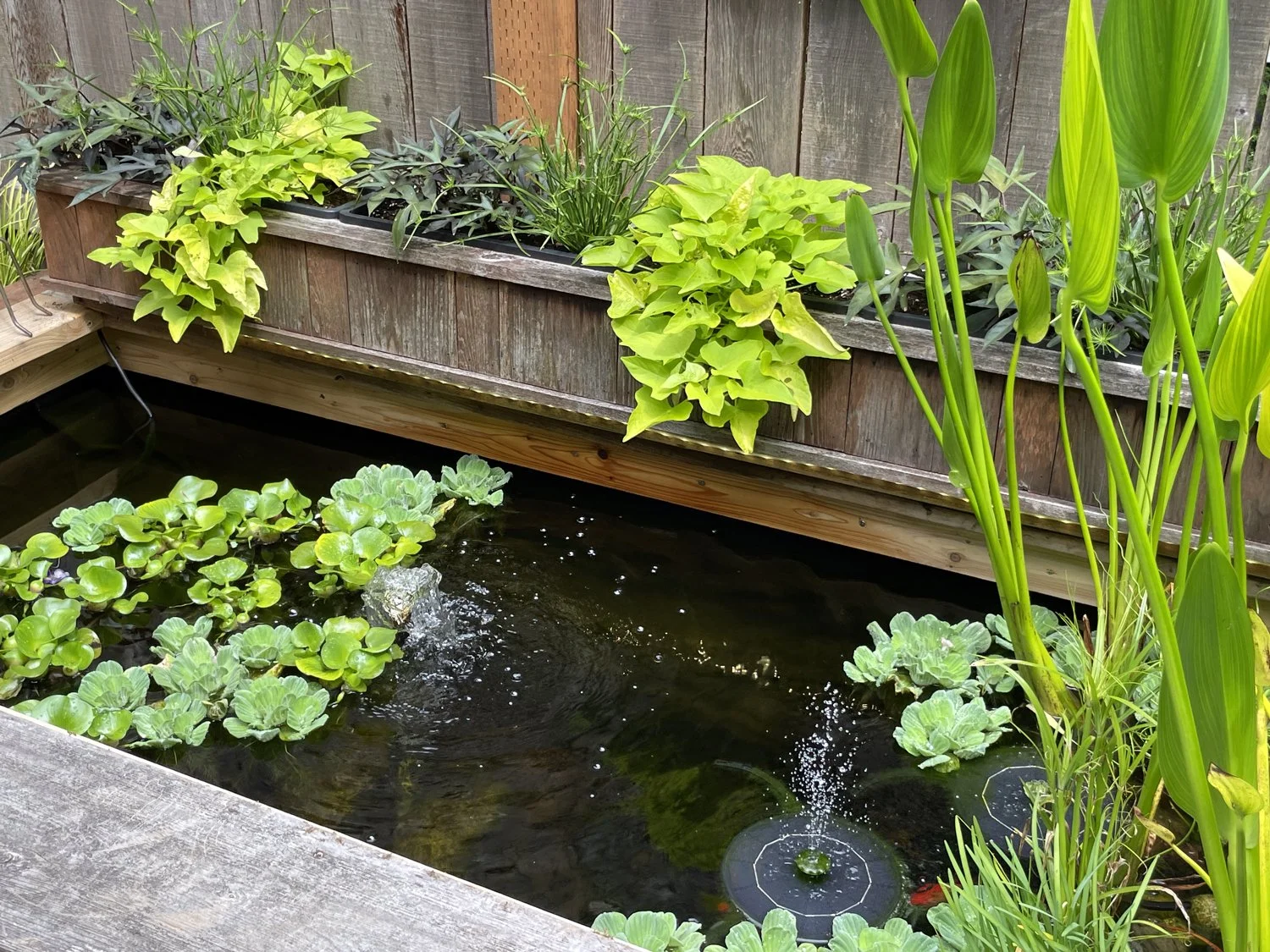
This wooden planter-and-small-pond combination was one of my favorite features on the tour. The gardeners explained that the pond was deep enough to protect their koi fish from predators. They added water plants and floating bubblers, as well as a variety of interesting foliage plants to the long planter at the back.
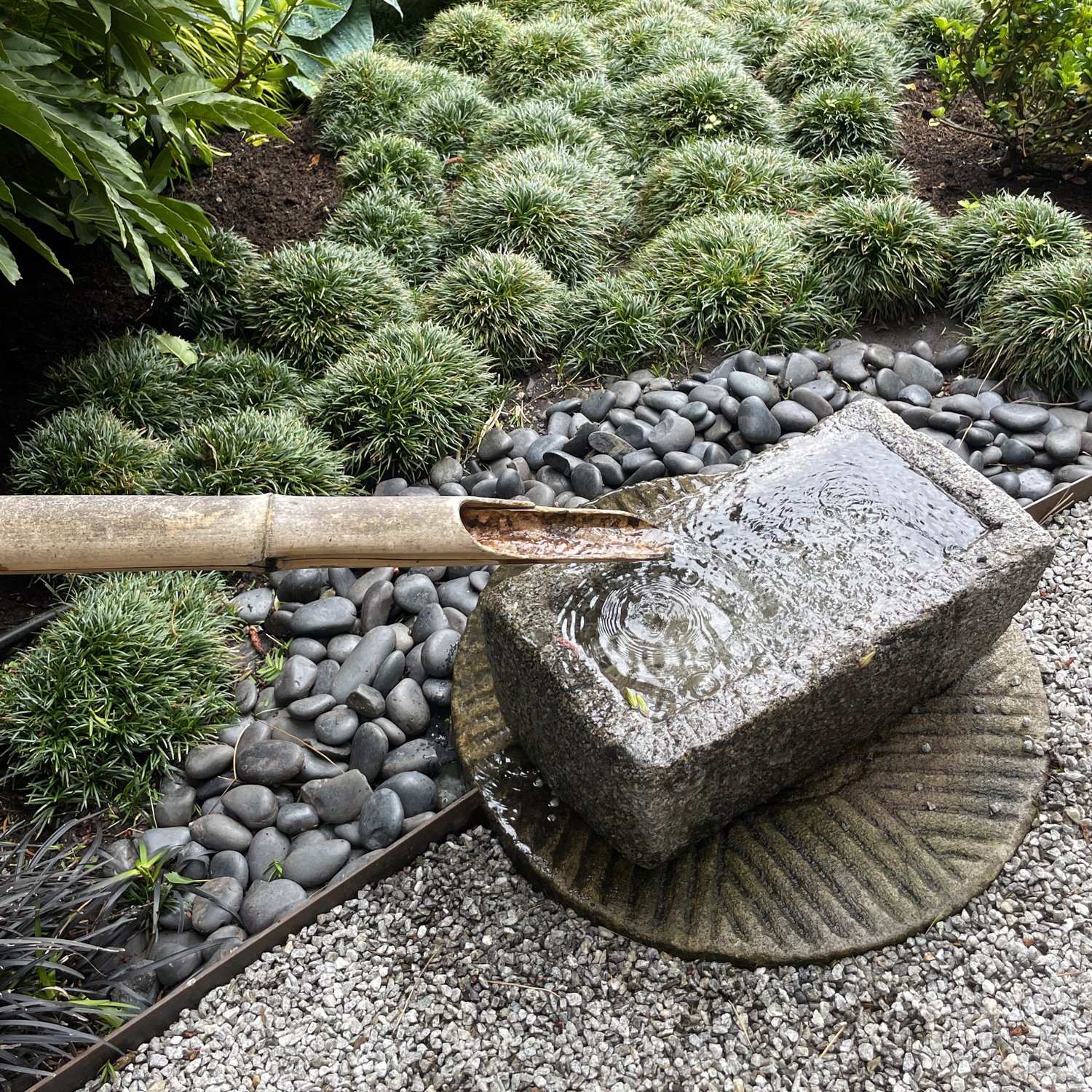
When planting around a fountain, consider the feeling you are trying to evoke. This Japanese-style garden uses the repetition of mounding grasses, smooth black rocks, and small gravel to create a tranquil ambience.
Soft layers of moss transform a traditional standing fountain. Symmetry in the plantings reinforces the formal design. The fountain is flanked by trained Euonymus on either side, accented by potted begonias. Star Jasmine is used as a fragrant background screen.
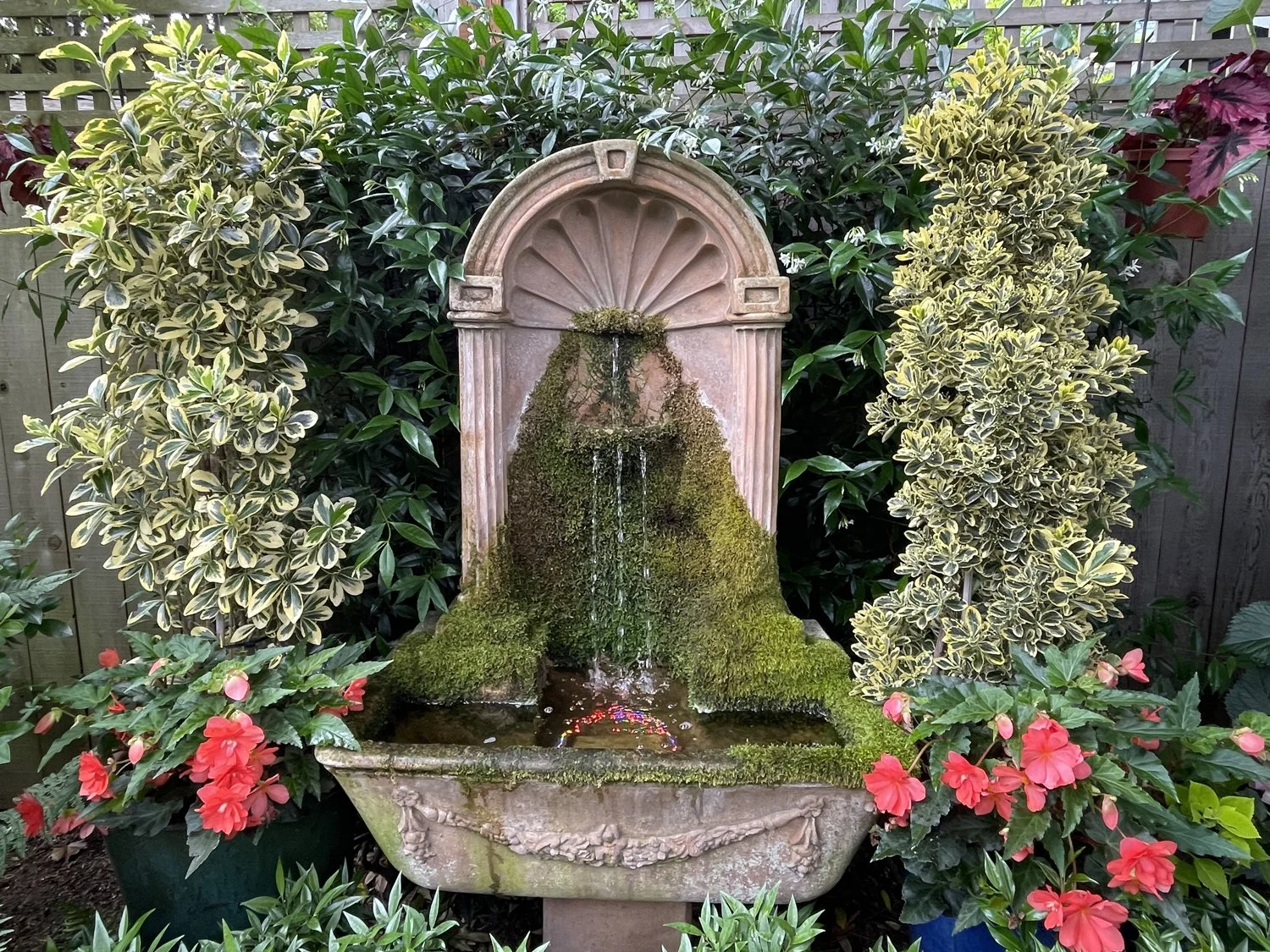
This mossy fountain leads us right into our next section: Aged Garden Accents. Objects with a natural patina reflect the ways in which the elements shape our gardens over time.
Aged Garden Accents
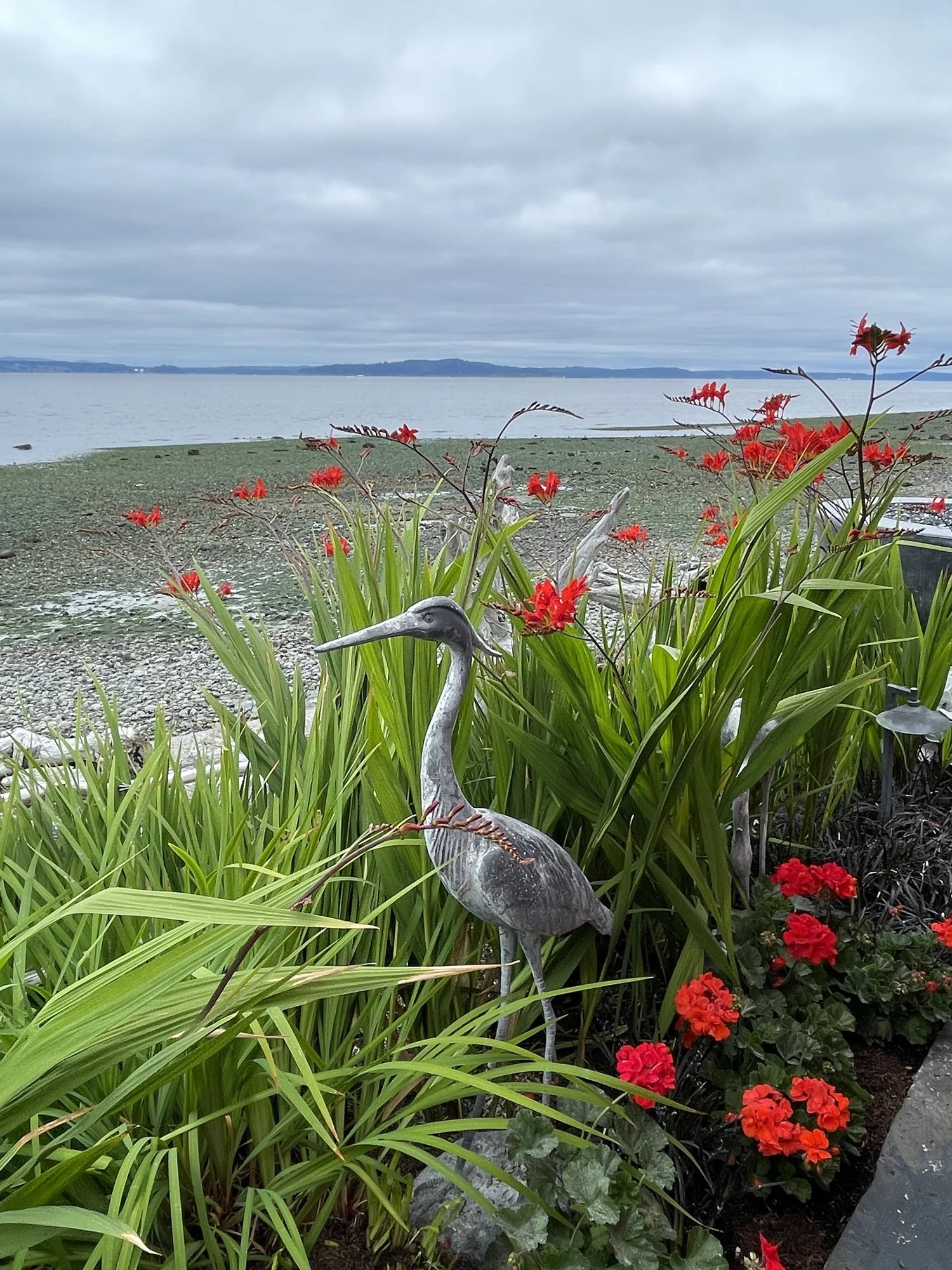
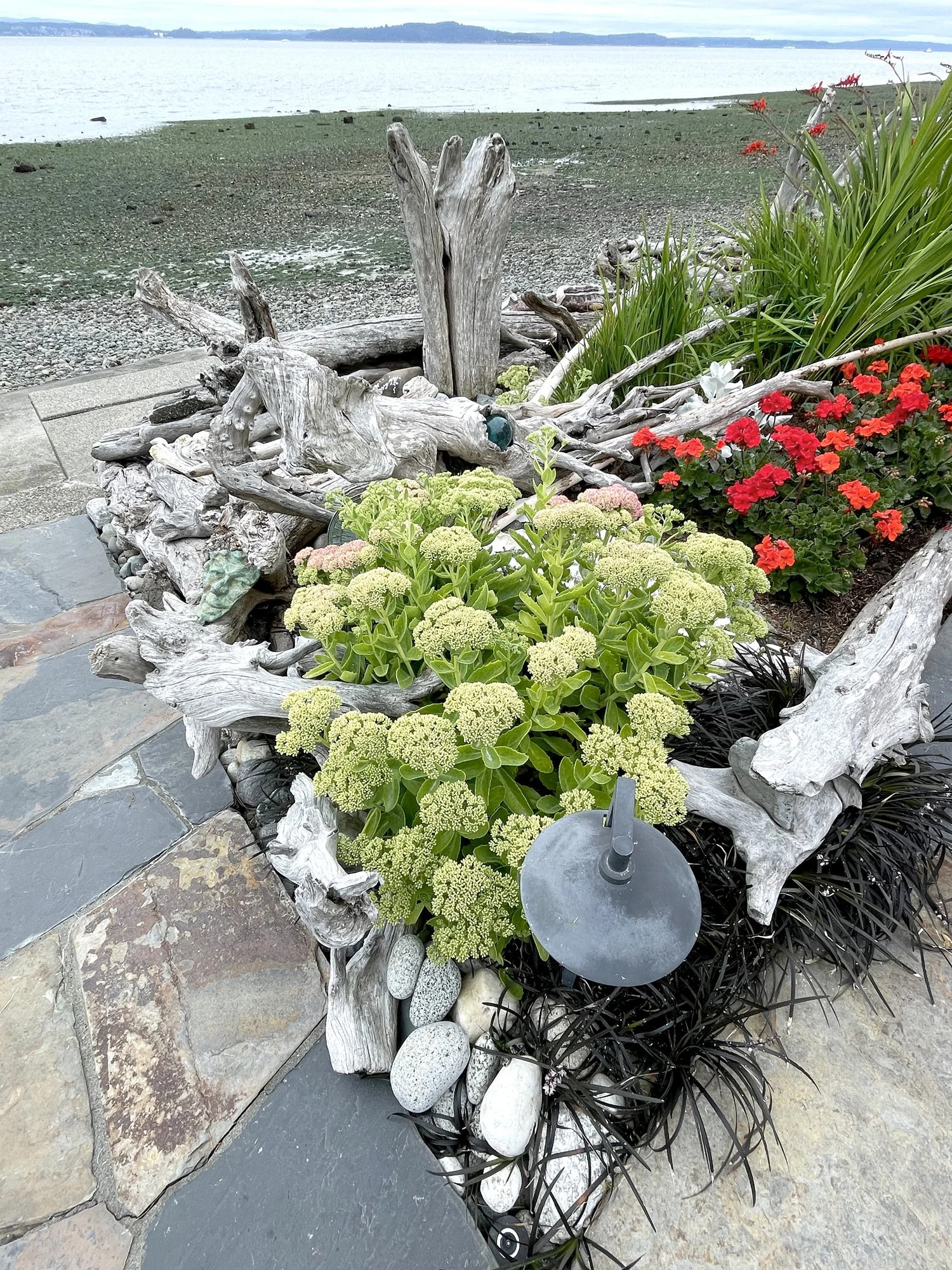
Many of the accents in the garden “Heron Cove” echo or are drawn from its natural surroundings. In the backyard, which leads to the beach, a heron statue stands guard. Driftwood frames garden beds planted with bright annuals and perennials, including Crocosmia, Black Mondo Grass, Autumn Joy Sedum, and Geraniums.
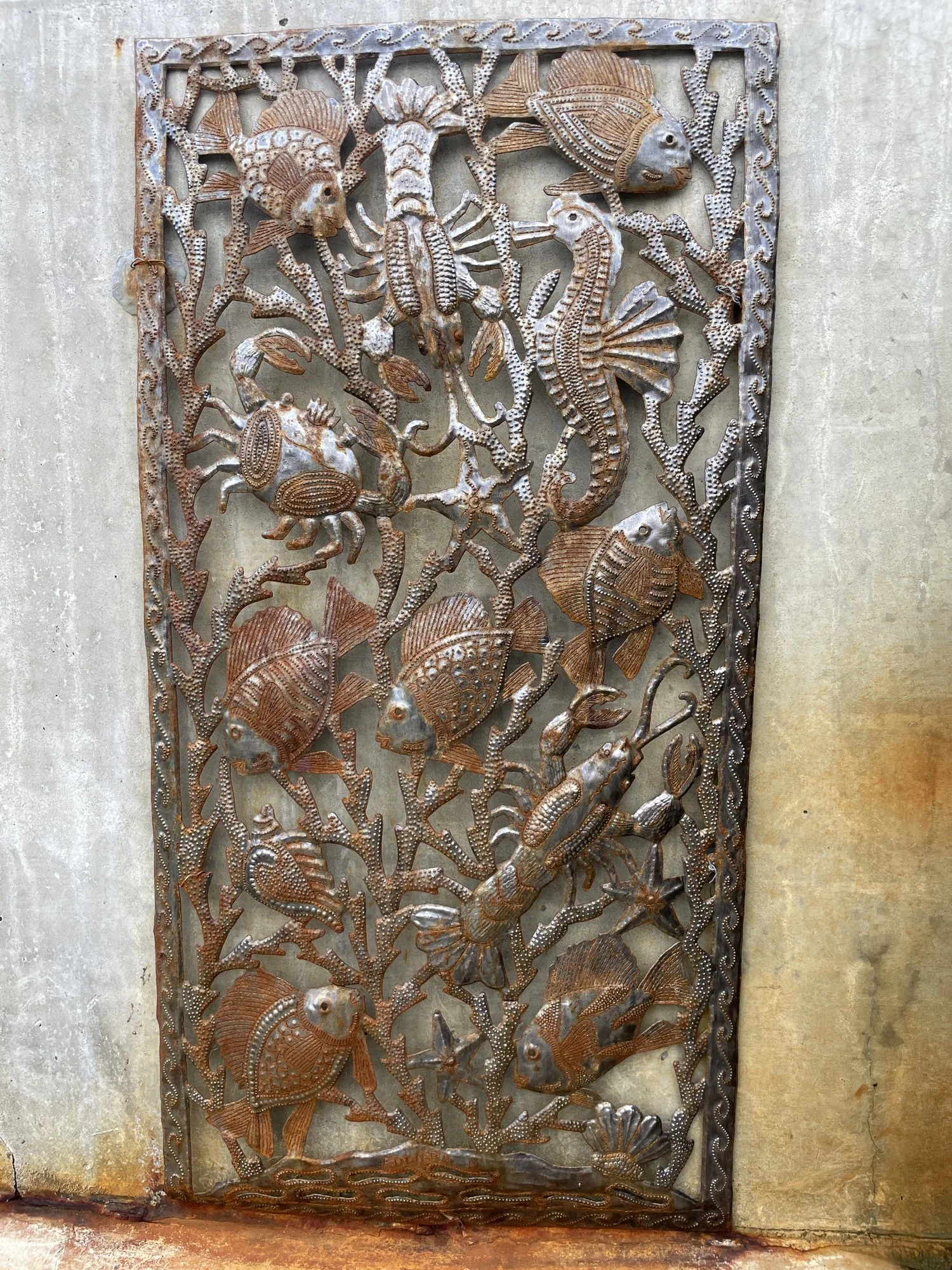
A majestic reef scene filled with sea creatures rusts as it ages, giving it the look of a shipwrecked treasure pulled from the ocean bed.
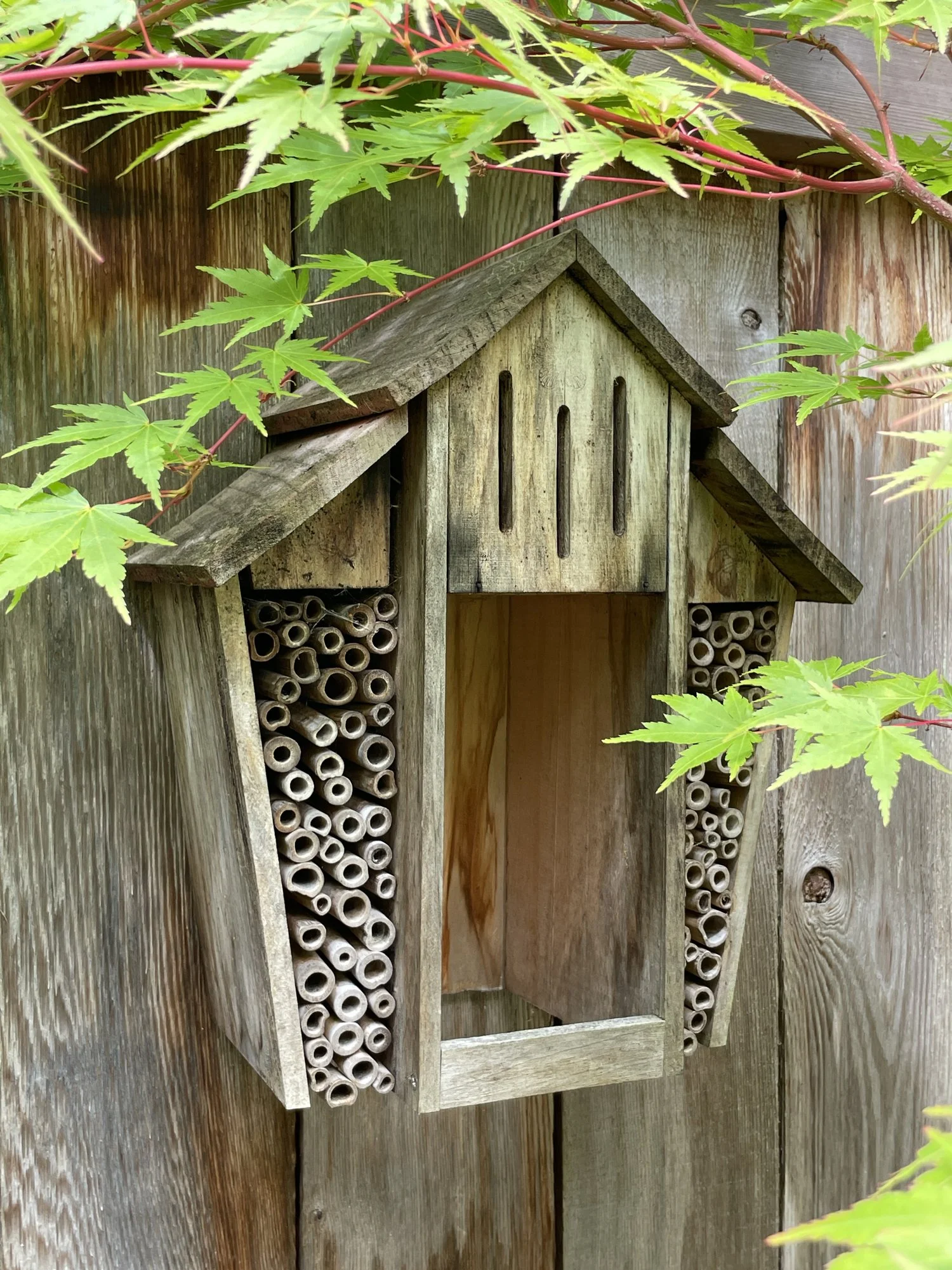
Naturalistic accents do not need to be elaborate. This weathered wooden mason bee house framed by a Japanese maple is modest and simple; a beautiful addition.
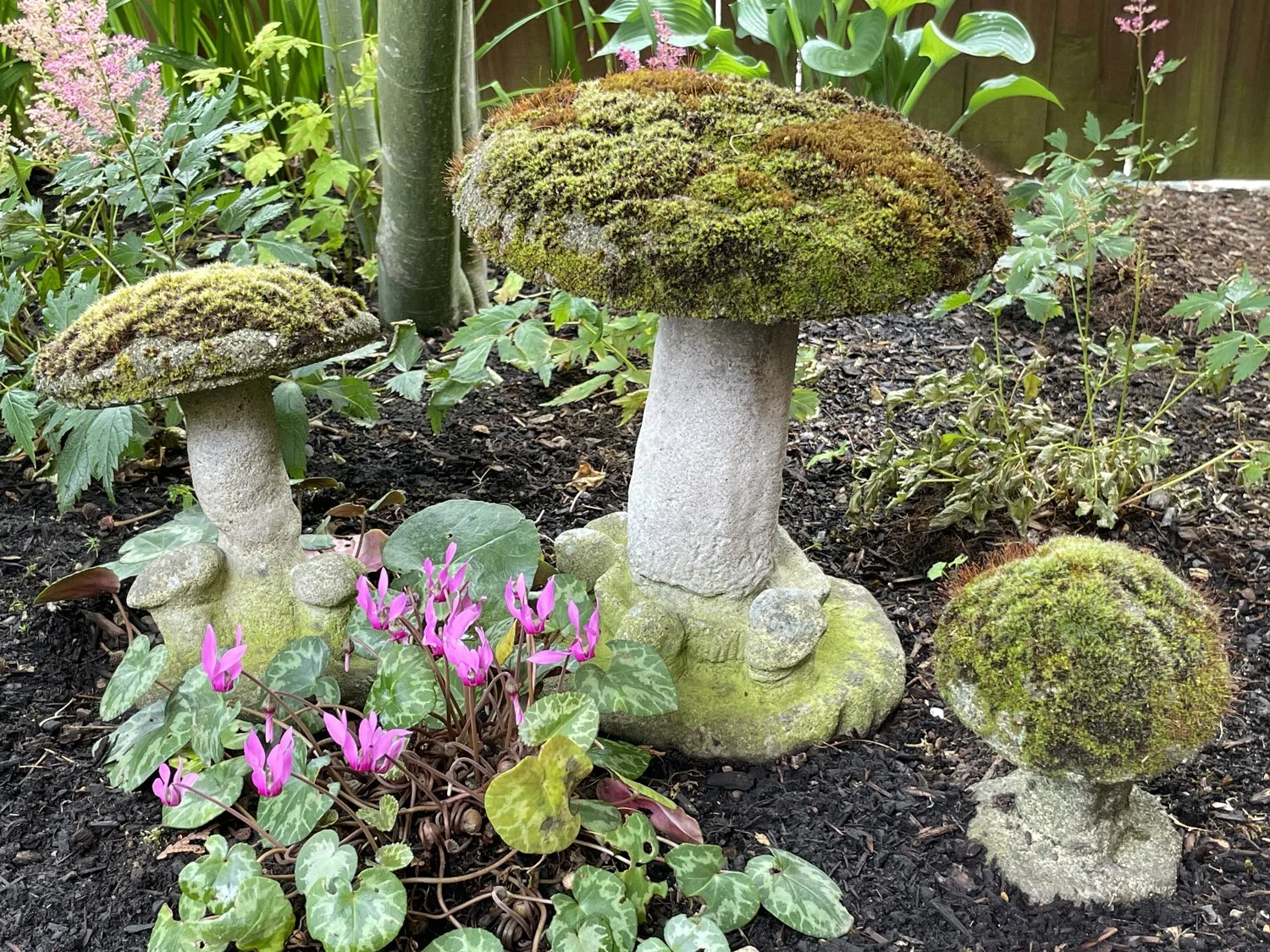
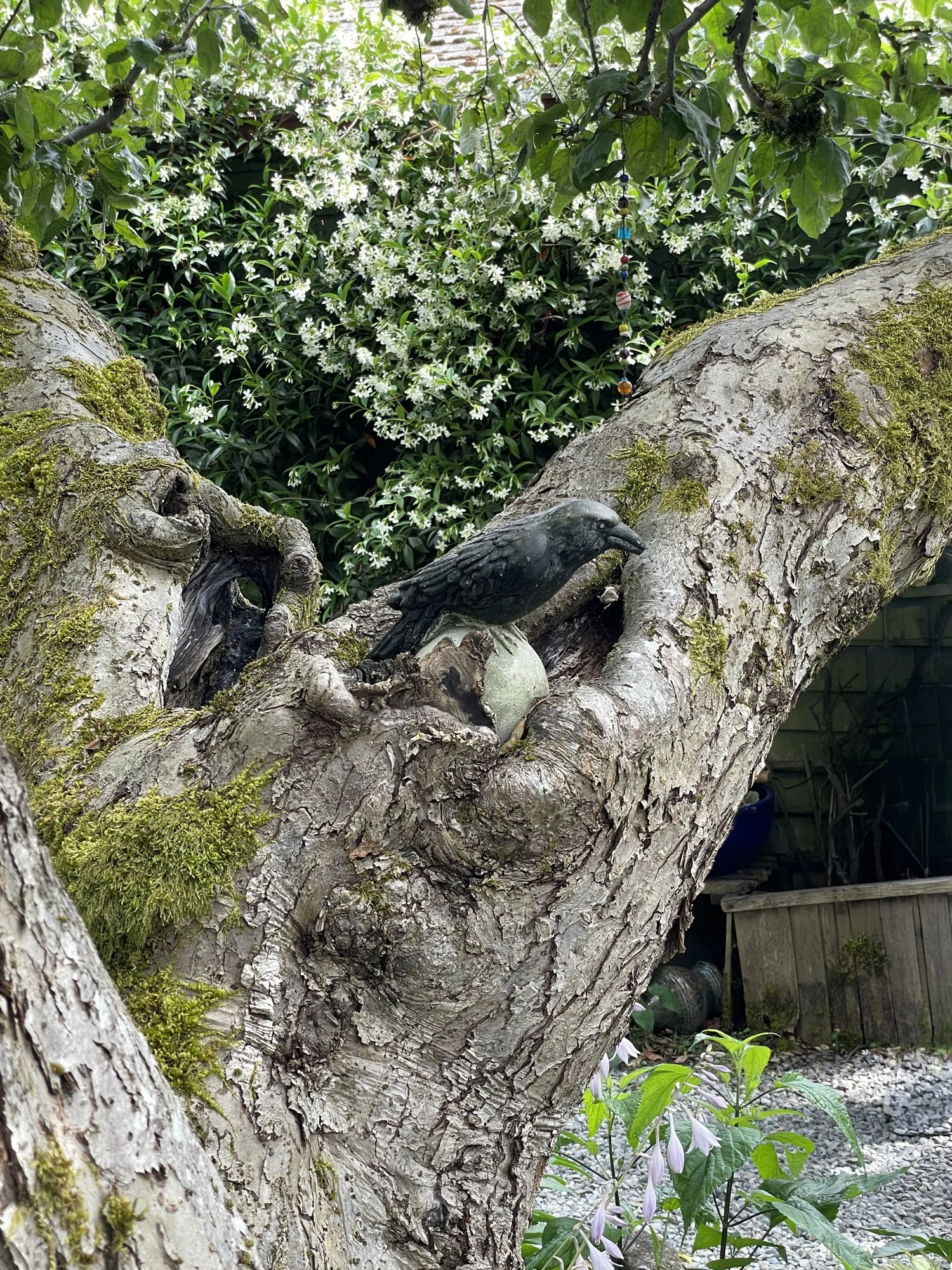
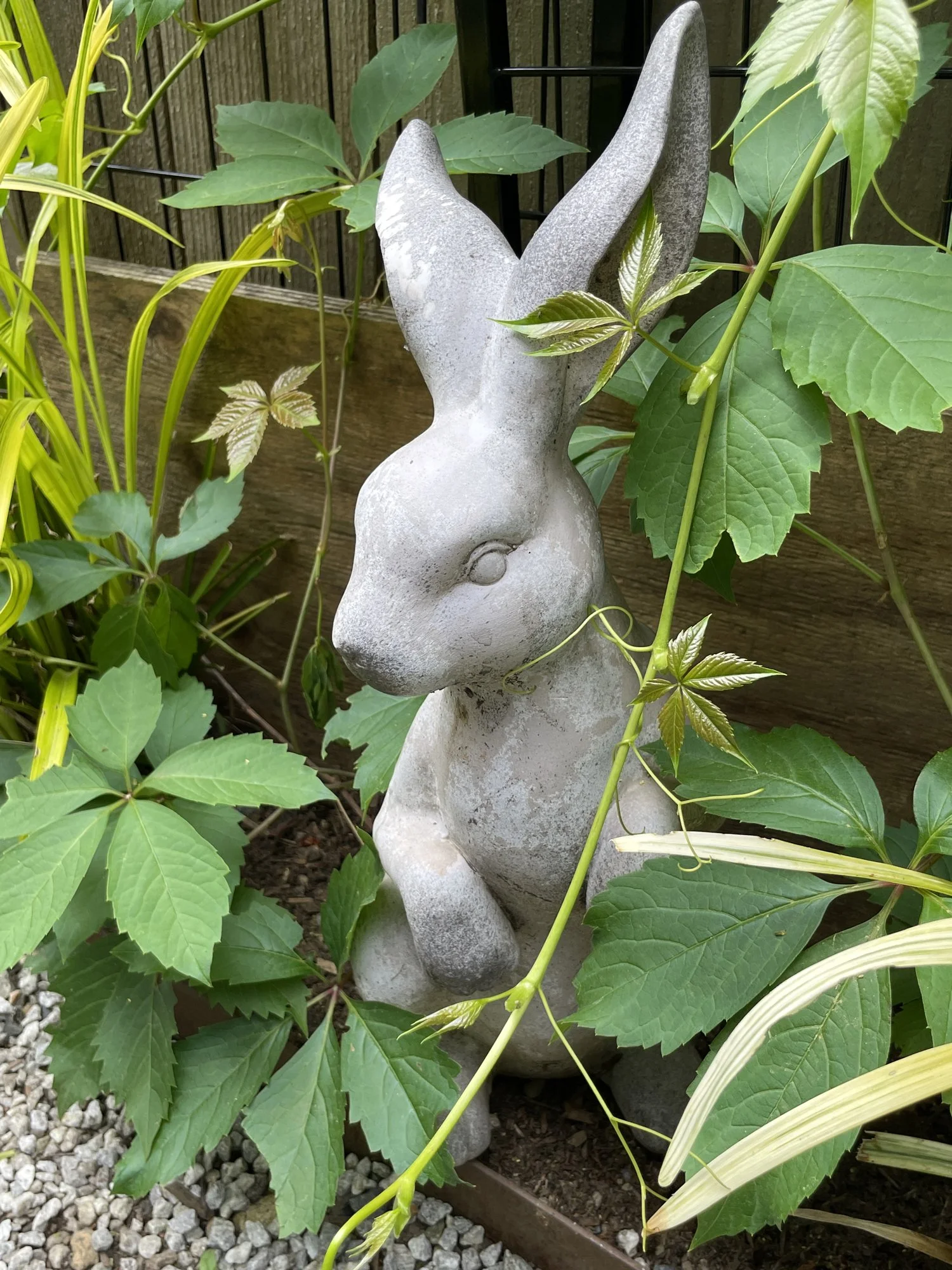
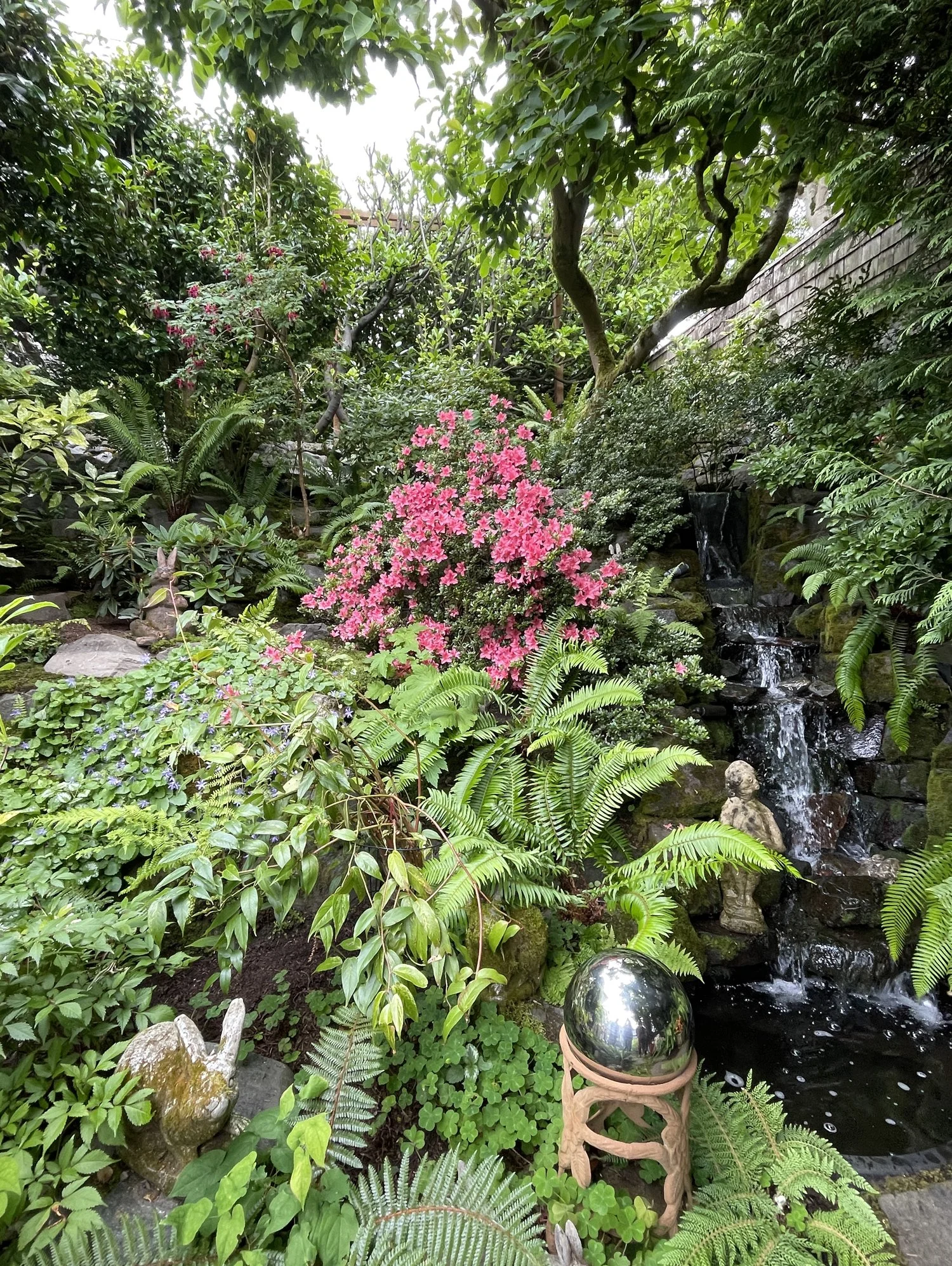
Garden ornaments become an organic part of the garden when covered with moss or tucked into the hollow of a tree.
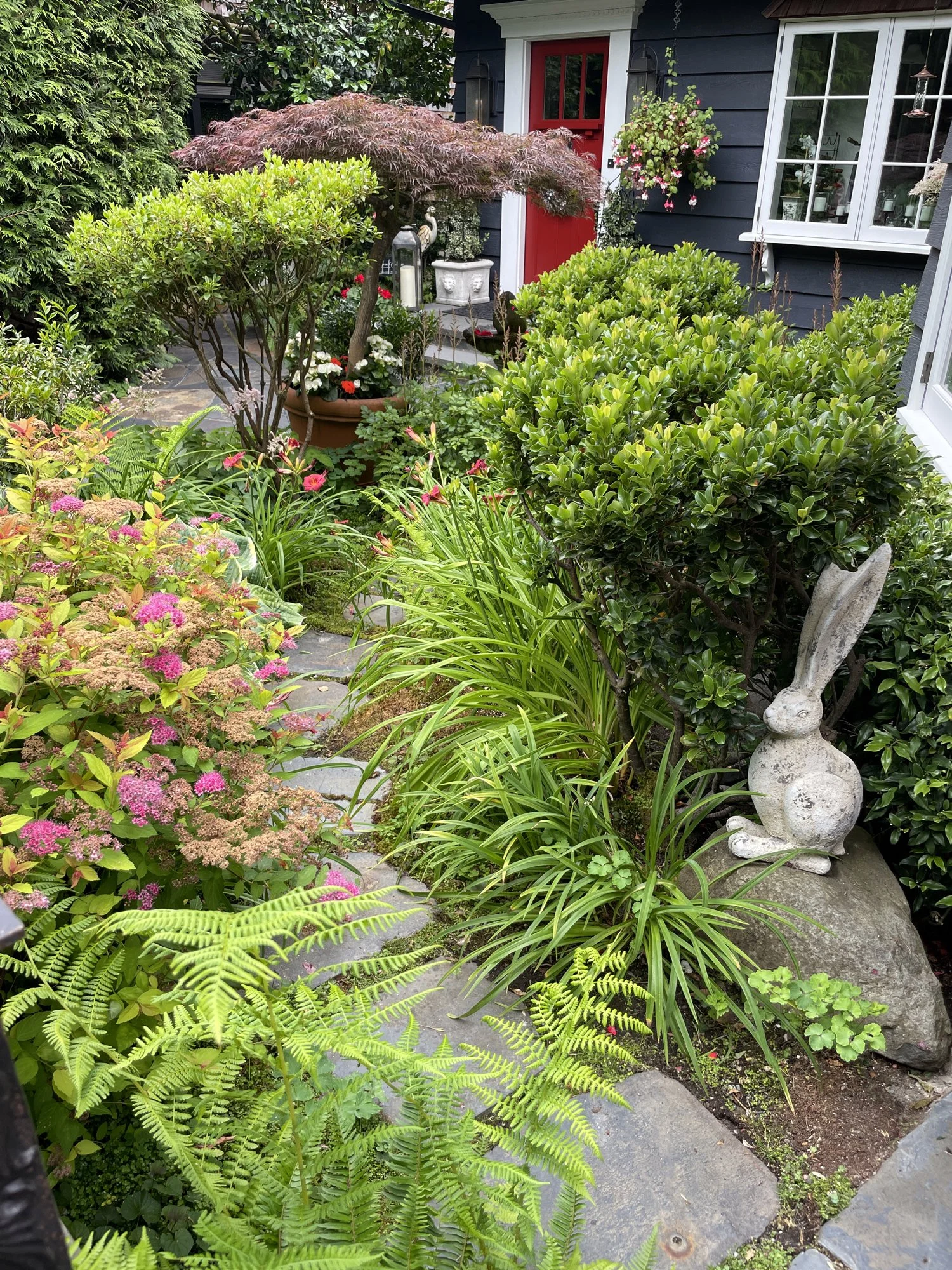
Rabbits were a popular choice seen in several different gardens on the tour. Surrounded by vines or nestled in the landscape, they become treasured garden inhabitants.
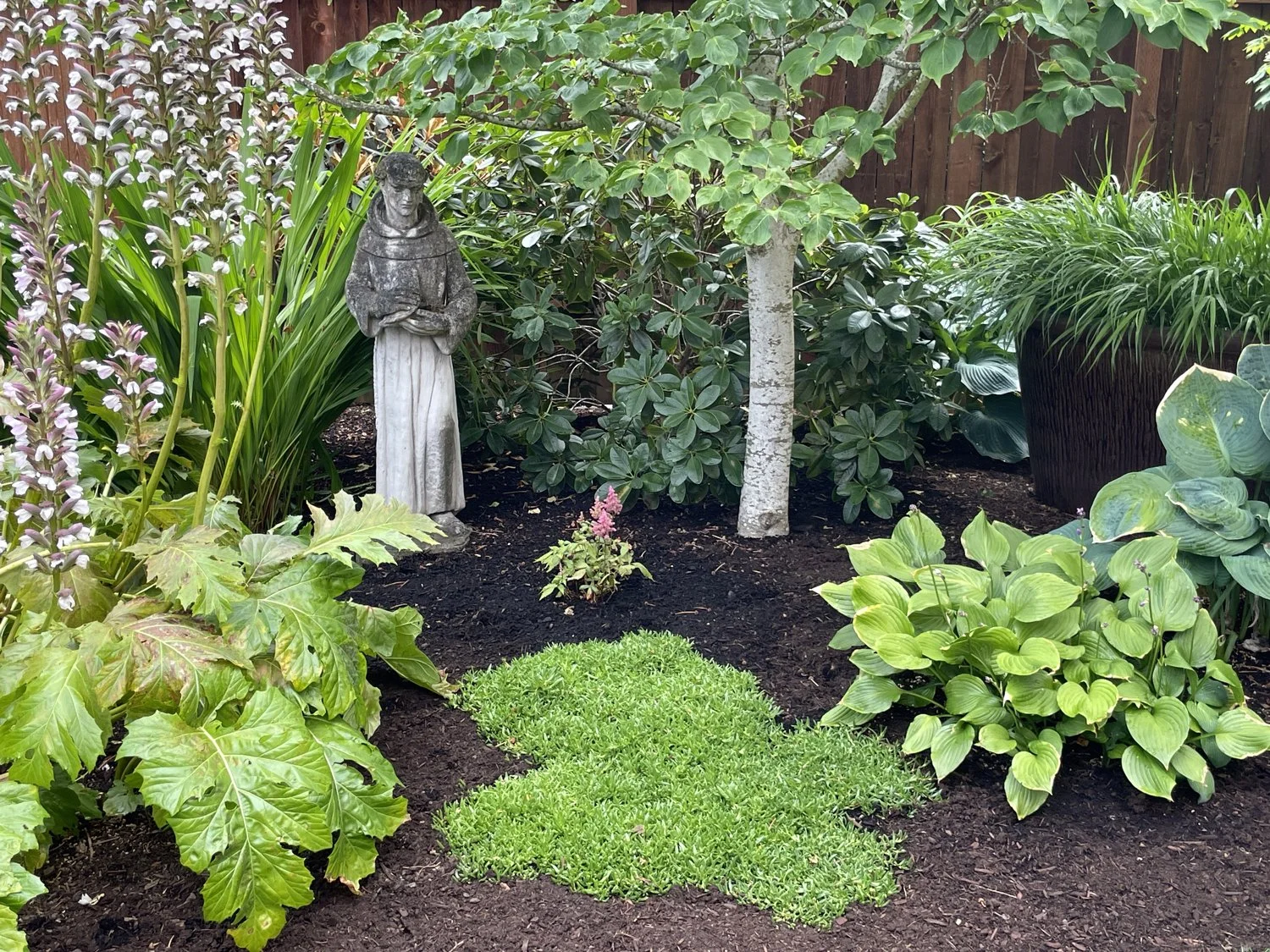
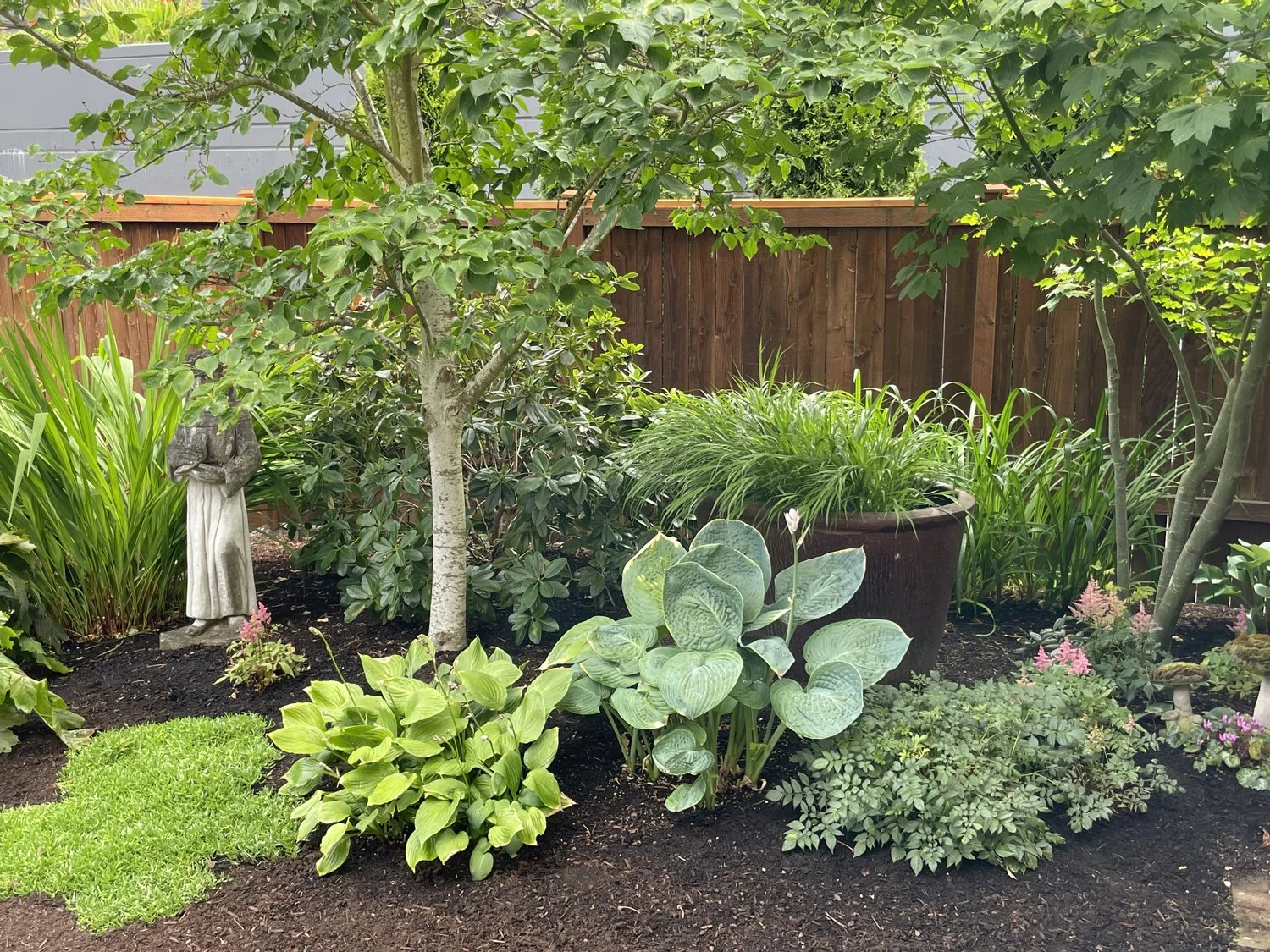
This aged statue of St. Francis echoes both the verticality of the neighboring Dogwood tree and the soft grey tones of the tree’s bark. It doesn’t shout; instead, it adds a quiet beauty to a shady garden bed filled with Hostas, Acanthus, and potted Japanese Forest grass.
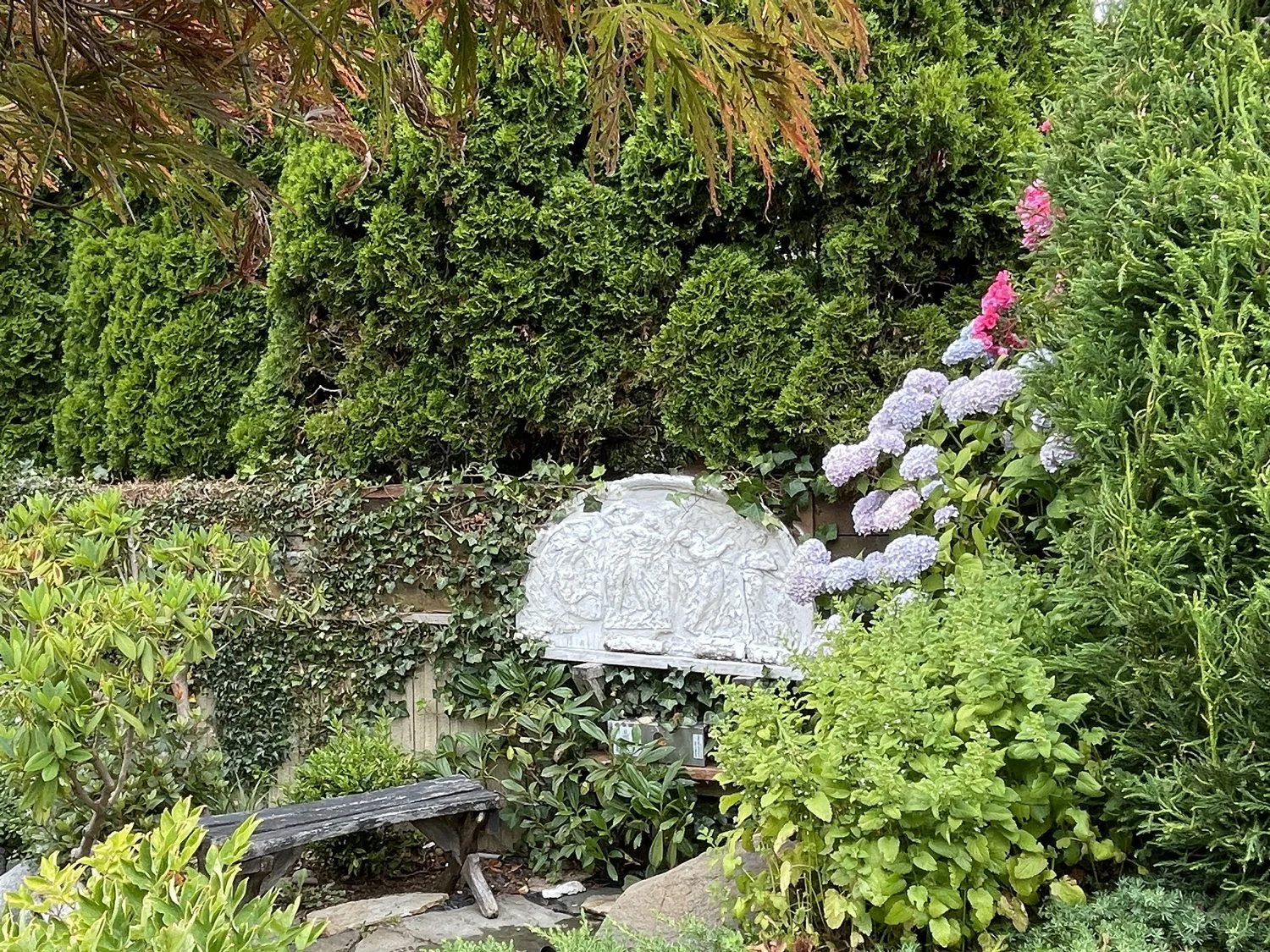
While many garden accents were rustic, a few gardens offered more formal touches. This classical bas-relief evokes an ancient courtyard garden.
And while this isn’t an example of an aged garden accessory, who could resist including a playful garage door mural by henry!

Conifers
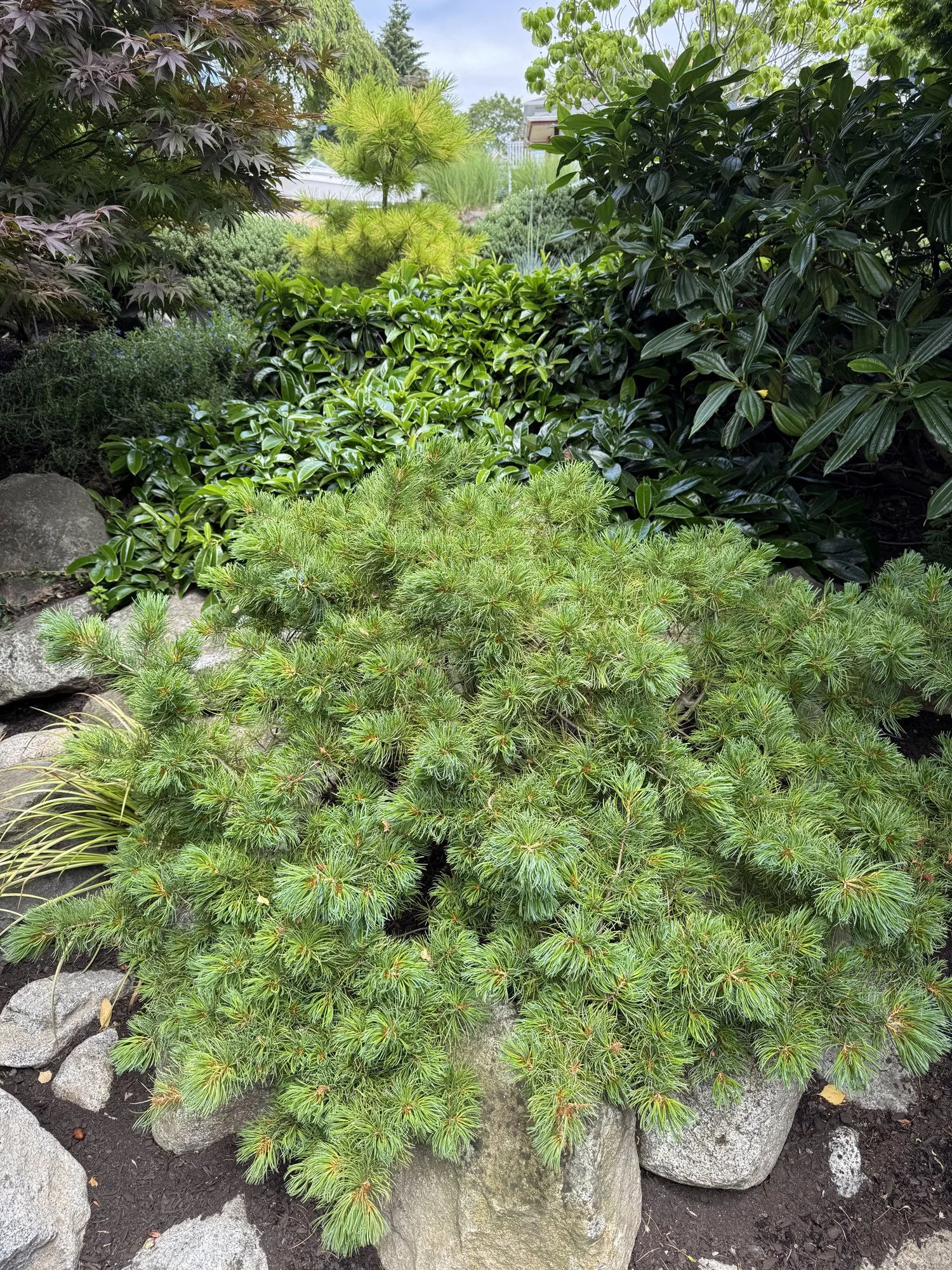
One of the delights of the tour was seeing so many interesting conifers highlighted in the gardens, some of which were dwarf plants suitable for smaller spaces. This Blue Shag Pine stays low, creeping over a rockery. In ten years, it will reach an approximate size of 3' ft. tall and 4 ft. wide.
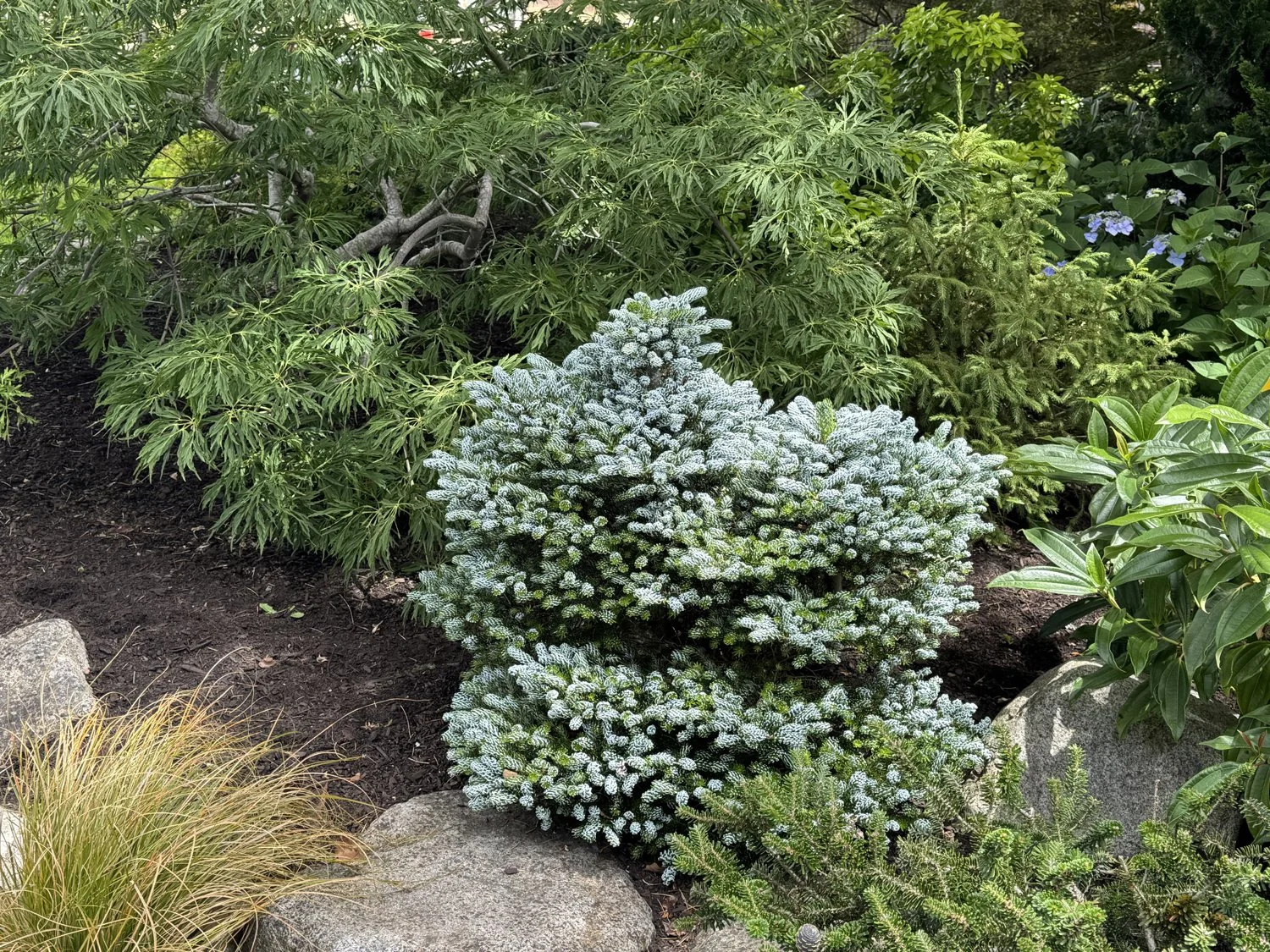
One of my favorite conifers: the Dwarf Korean Fir. You don’t need a large space for a conifer such as this. It grows 2-6 ft. tall and 2-3 ft. wide at maturity.
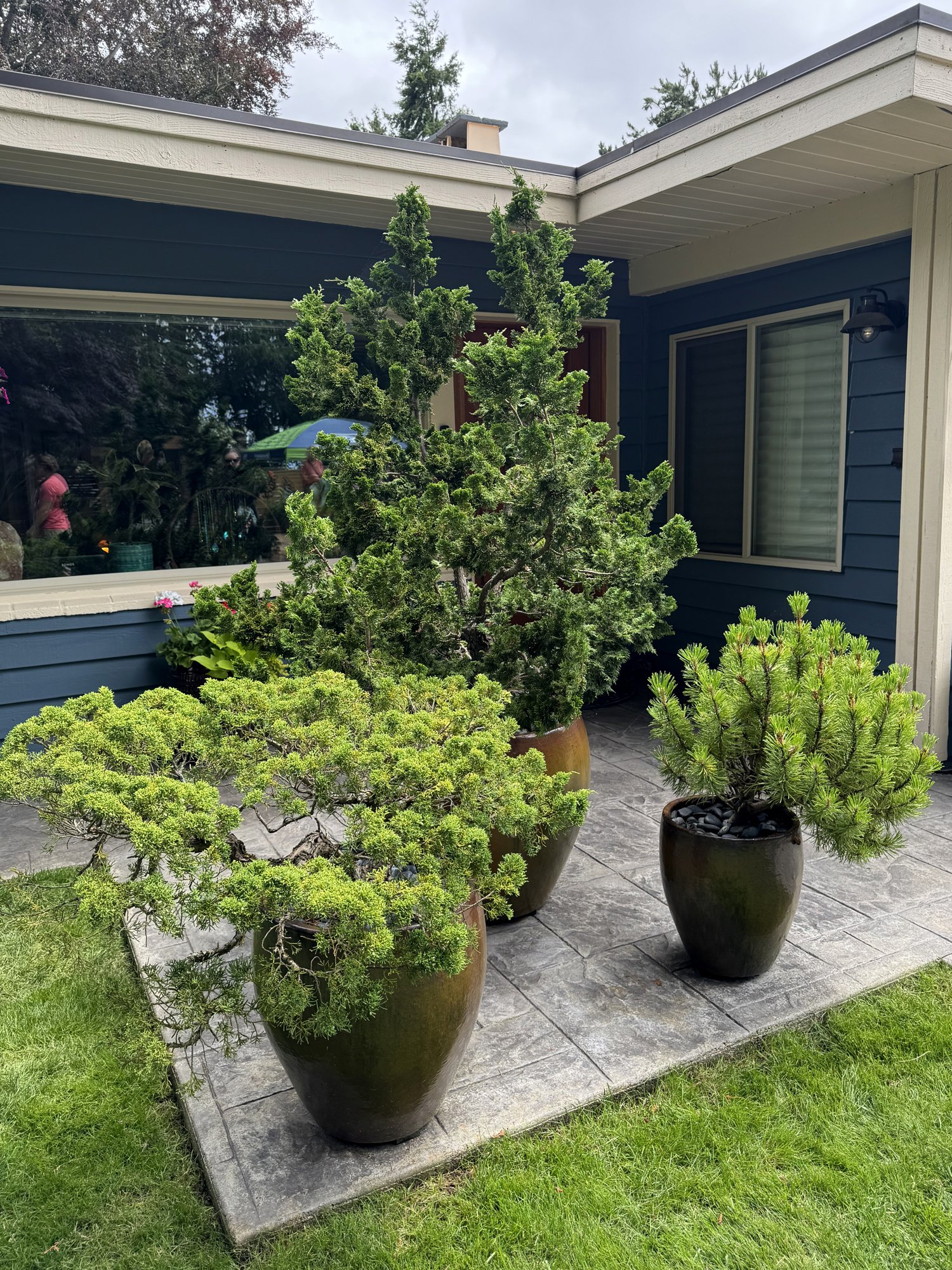
Conifers are also wonderful as statement plants in pots, especially since they offer four-season interest. Seen here (left to right): Juniper, Hinoki Cypress, and Mugo Pine.
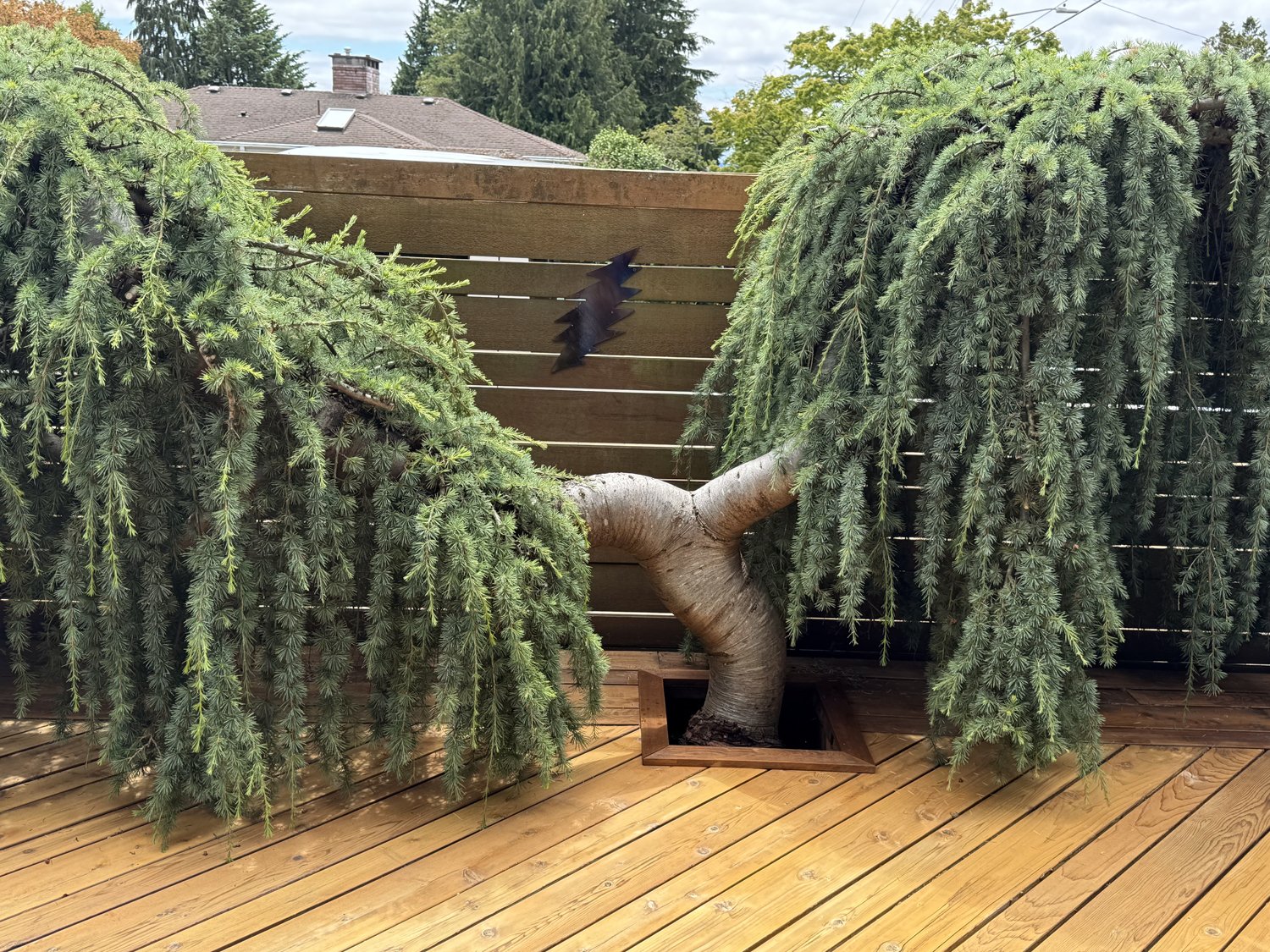
If you do have more space, try a statement tree. The garden “Conifer Corner” showcased a gorgeous specimen of Weeping Blue Cedar. The owners lovingly built their deck around the tree, even expanding the cutout space as the trunk grew larger.
Several gardens featured interesting Pinus species like the three below. Their contorted branches make for a great focal point in the garden.
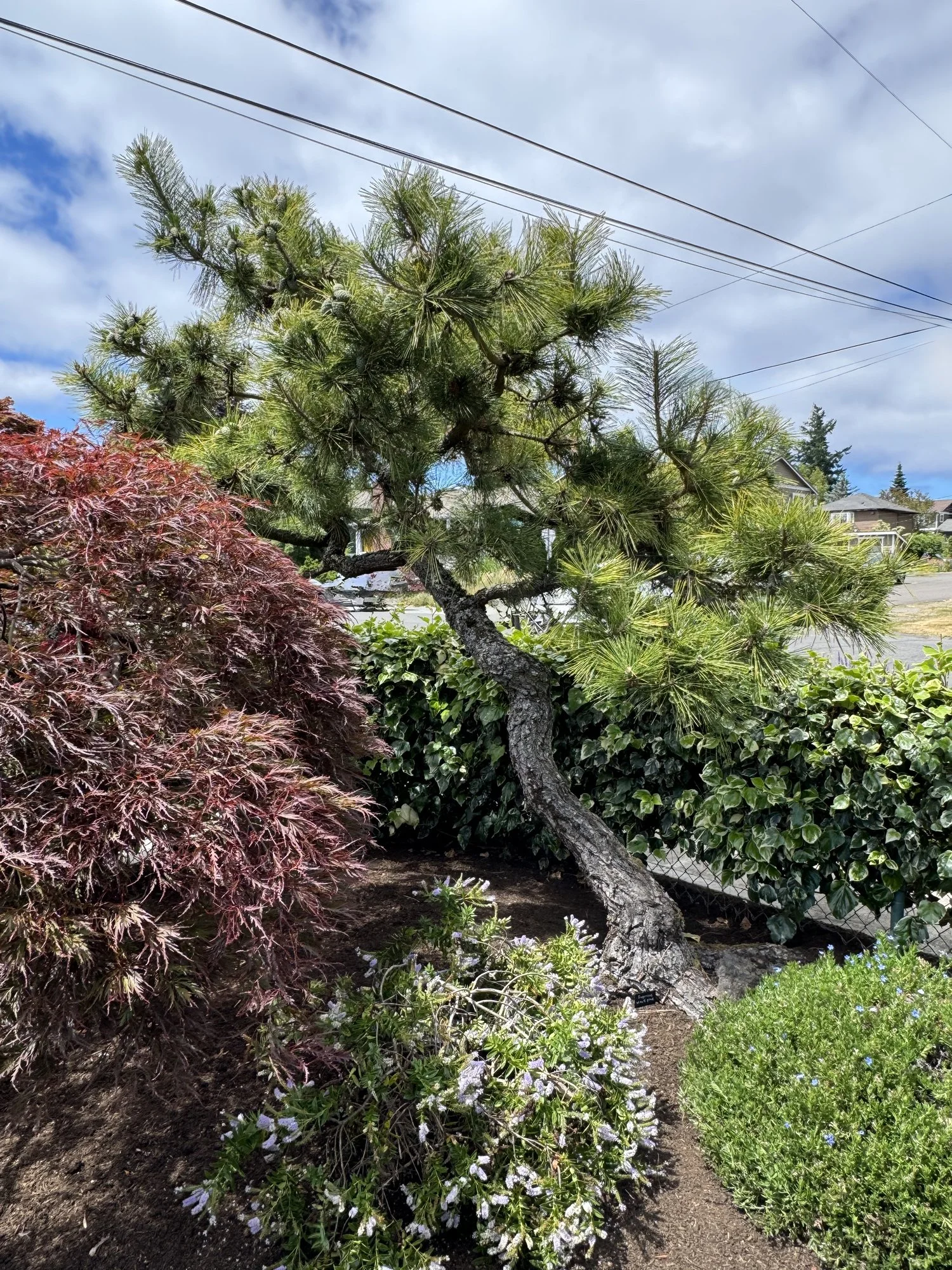
Japanese Black Pine
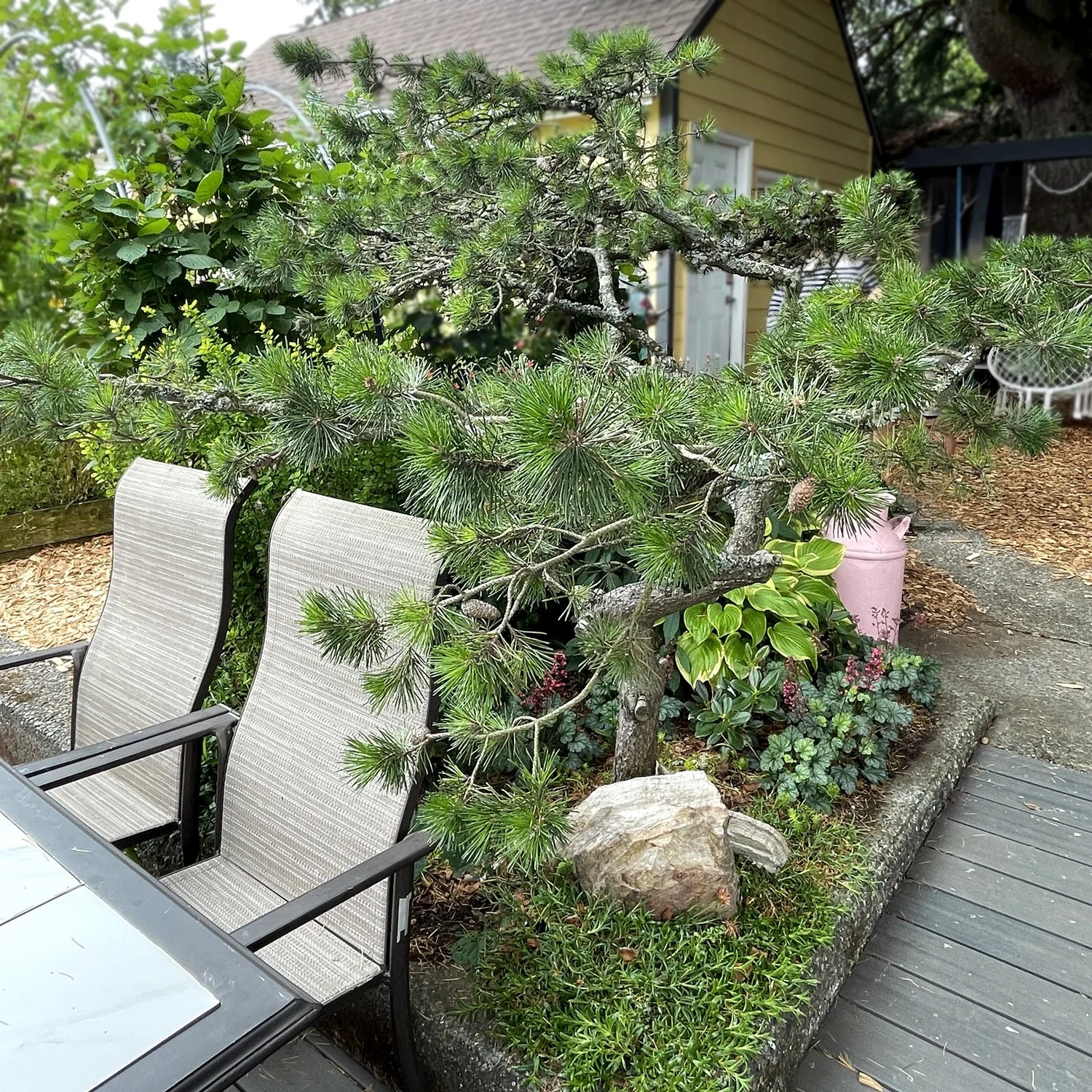
Japanese Black Pine, possibly the ‘Thunderhead’ variety.
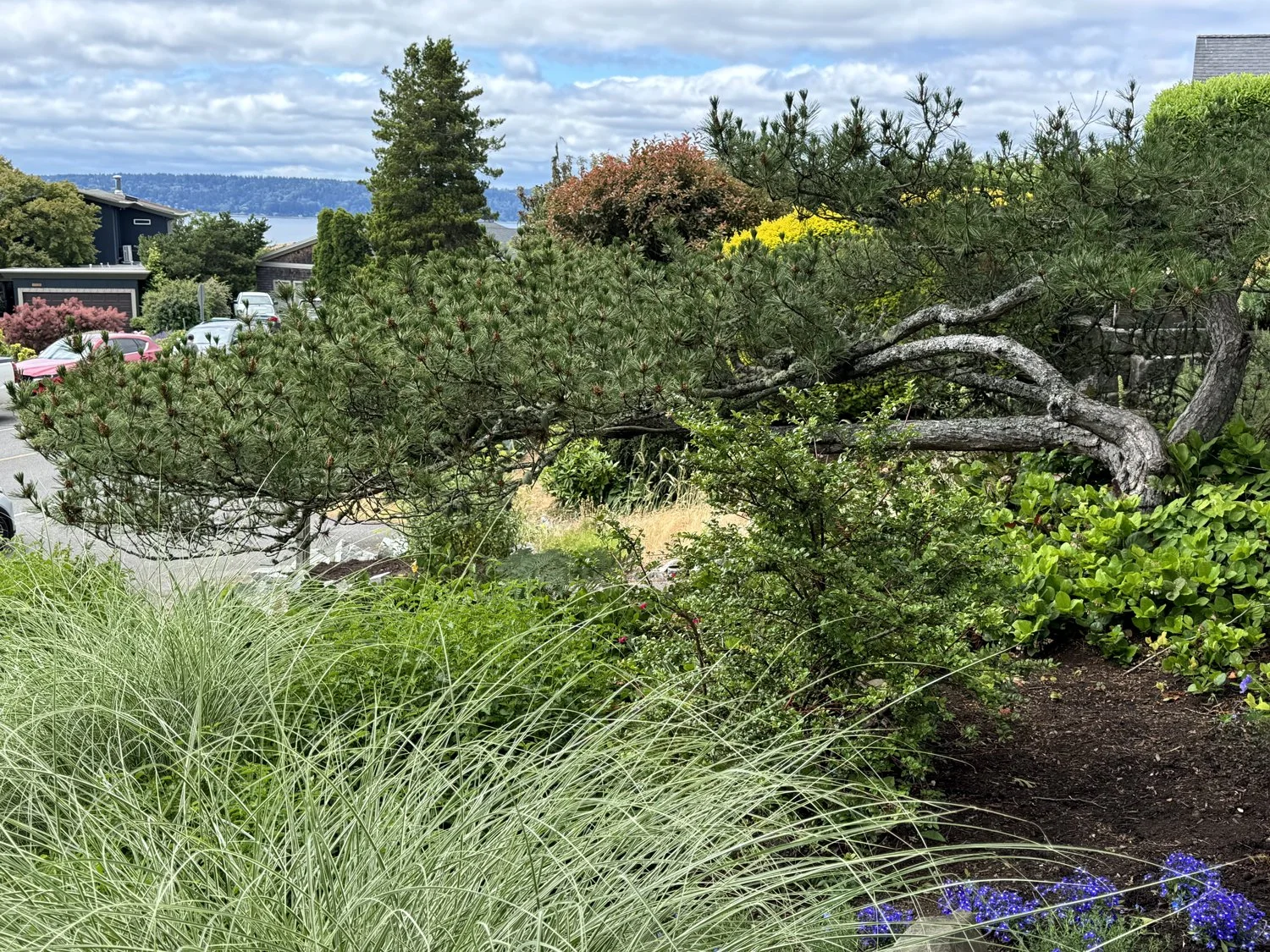
Contorted Shore Pine
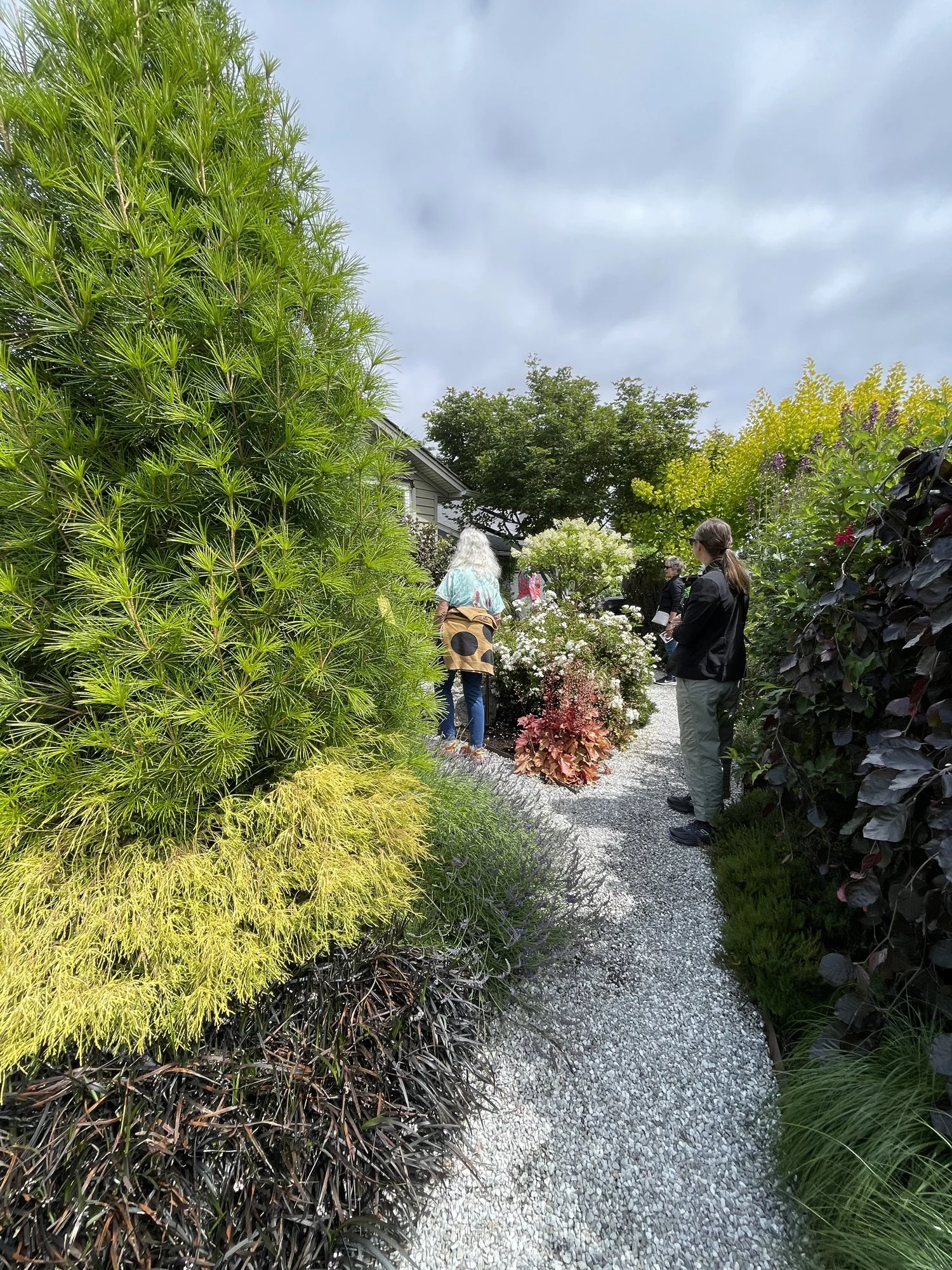
This Umbrella Pine is definitely a conversation piece, slowly reaching up to 40 ft. tall. The underplanting of Chamaecyparis, Black Mondo Grass, and Lavender creates an amazing contrast of colors and textures.
Layering
A well-designed garden looks thoughtful but not perfect. Layering mimics a natural landscape, creating a full, lush look that isn’t overly fussy. When layering, think in terms of vertical space and horizontal space. Use repetition (of colors, textures, or plants) to tie the ensemble together, and plant in drifts (groupings of 2-3 plants) for a more natural look.
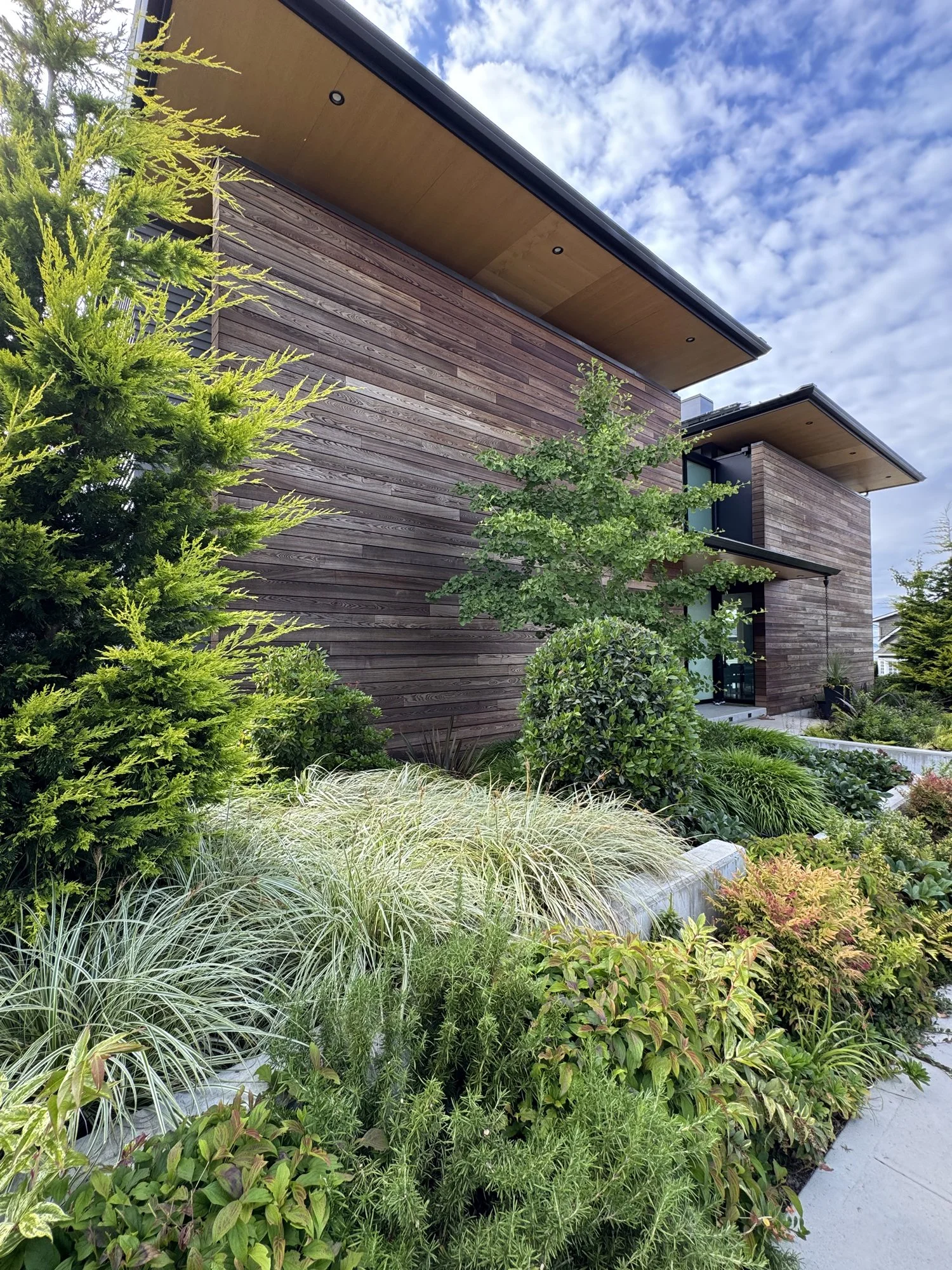
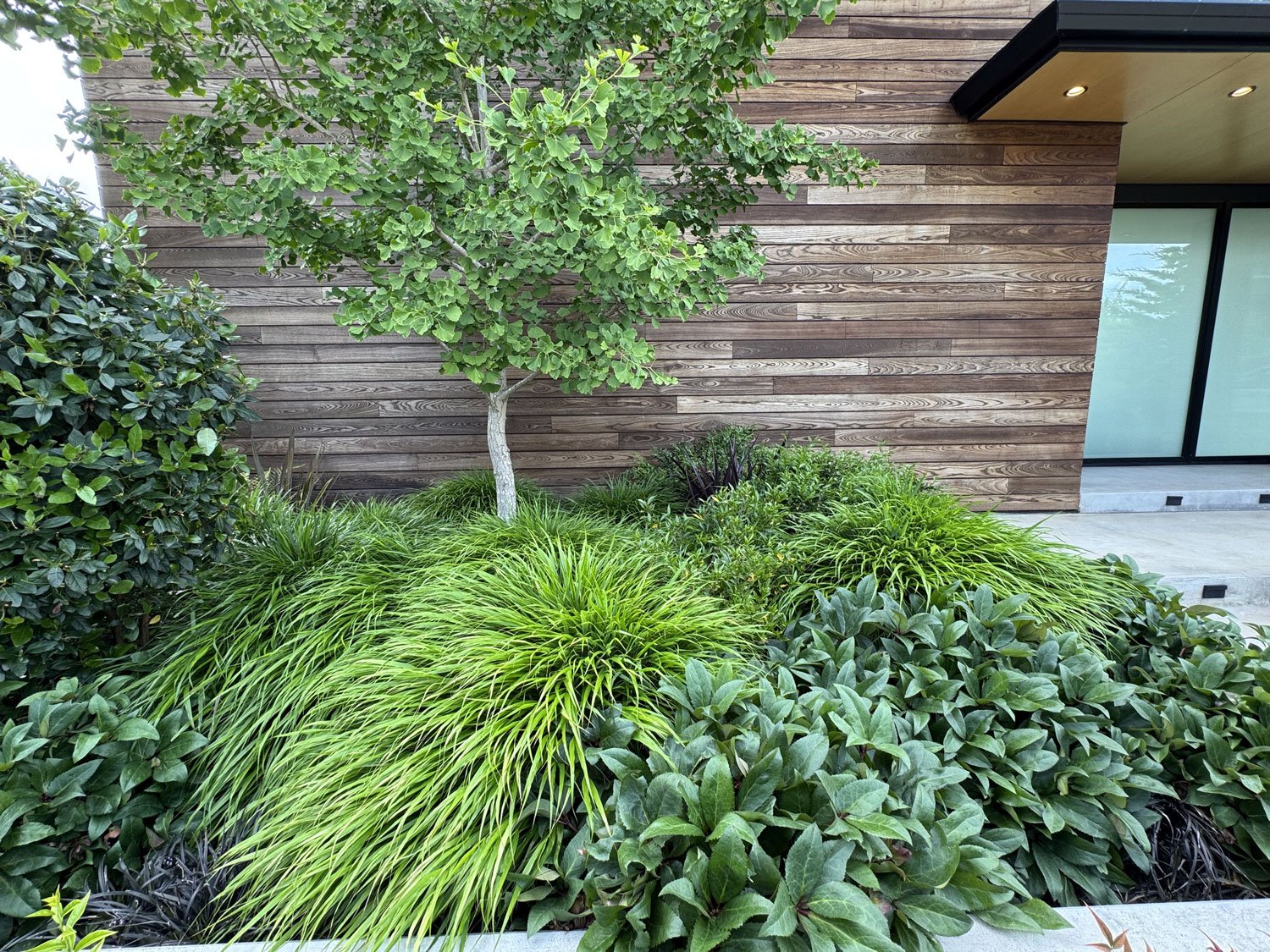
In the garden below, the layered plants soften the sharp edges of the modern architecture and cement planters. The gardener repeated plants such as Rosemary, Leucothoe, Nandina, and Hellebore along the edges. Grasses are planted en masse for dramatic effect.
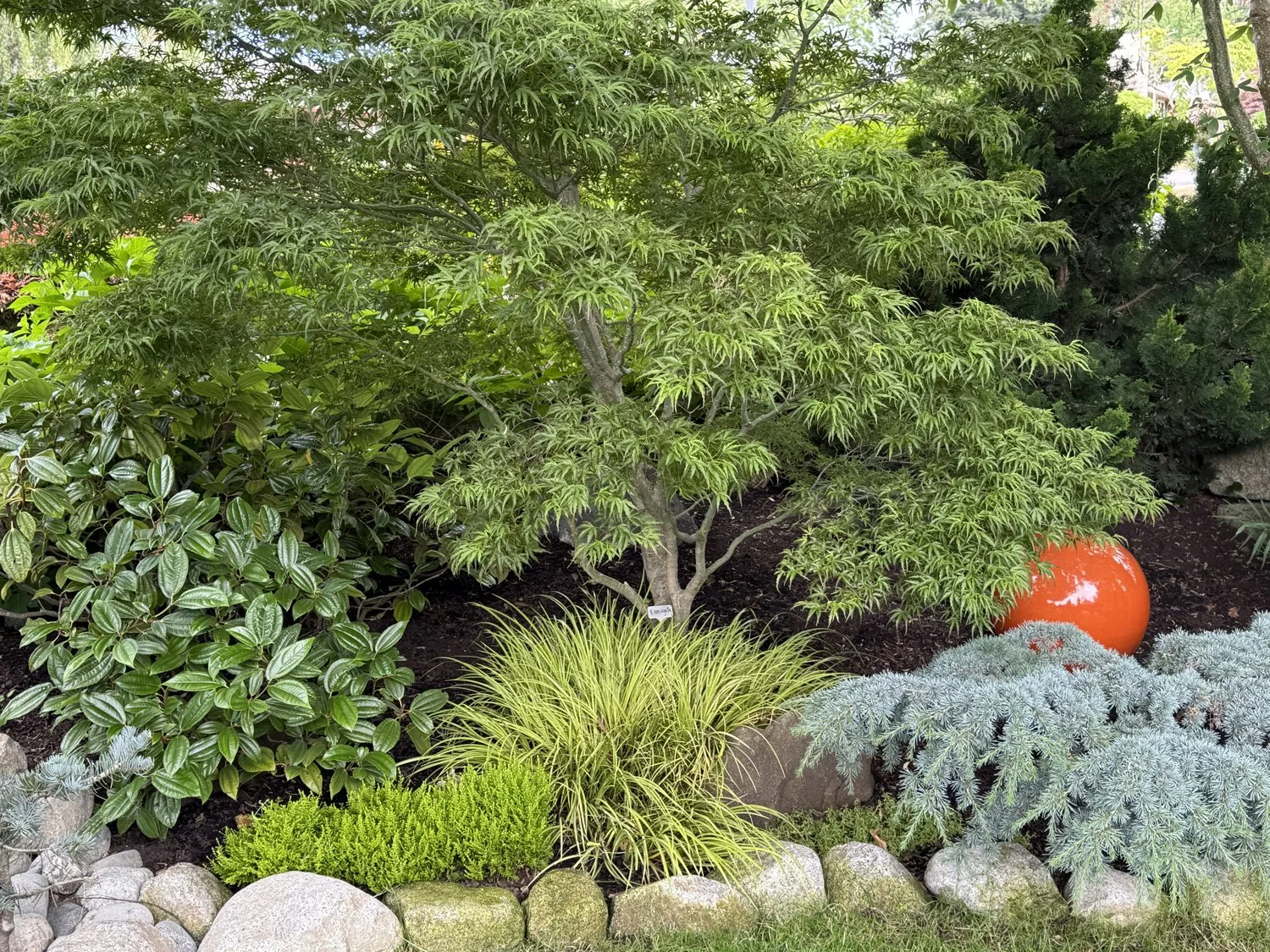
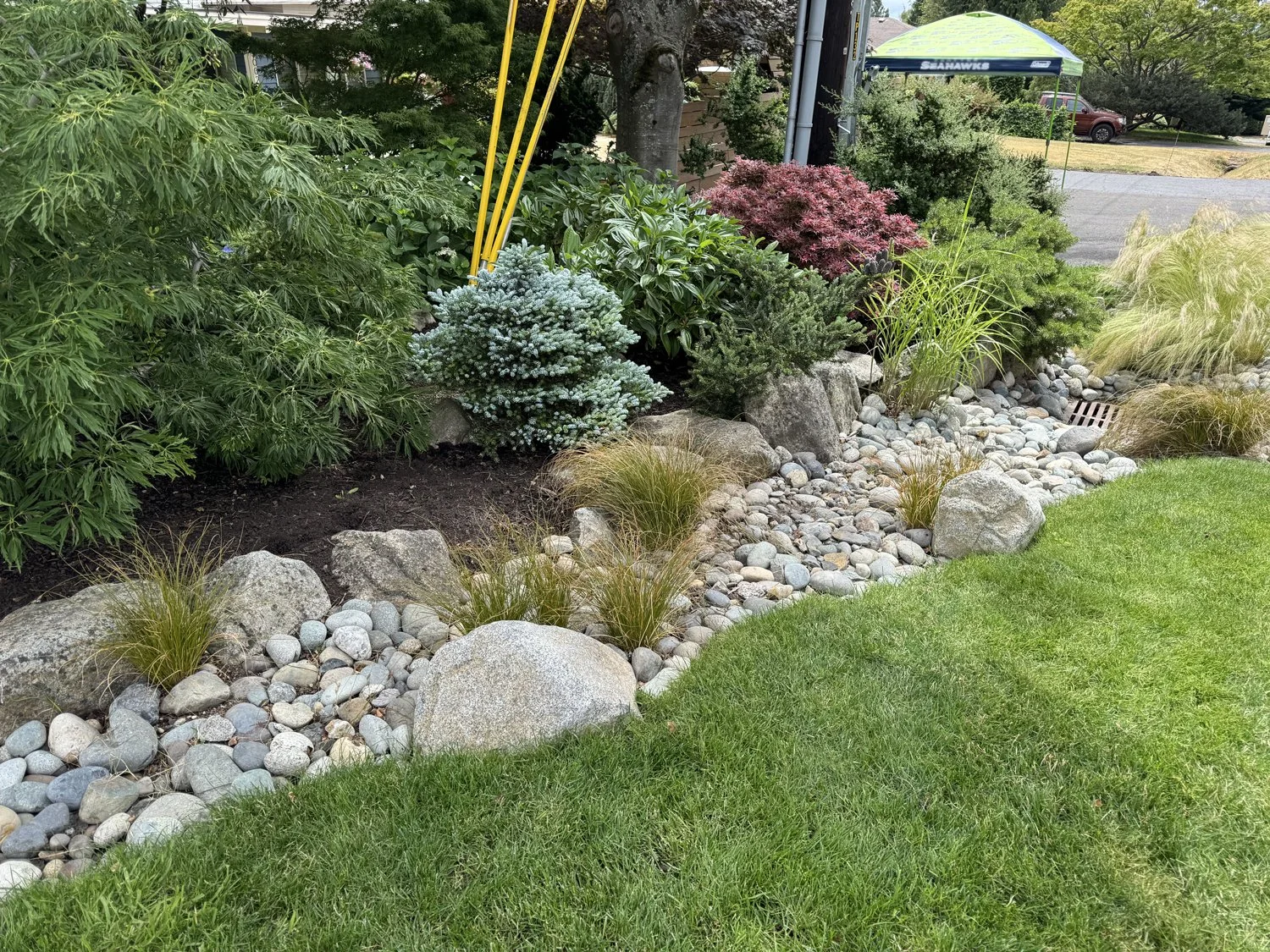
Contrasting textures and colors have great visual appeal in the garden below. The wide, glossy leaves of Viburnum, delicate Japanese Maple leaves, the thin, strappy leaves of Golden Variegated Sweet Flag (Acorus ‘Ogon’), and the soft needles of creeping conifers come together beautifully.
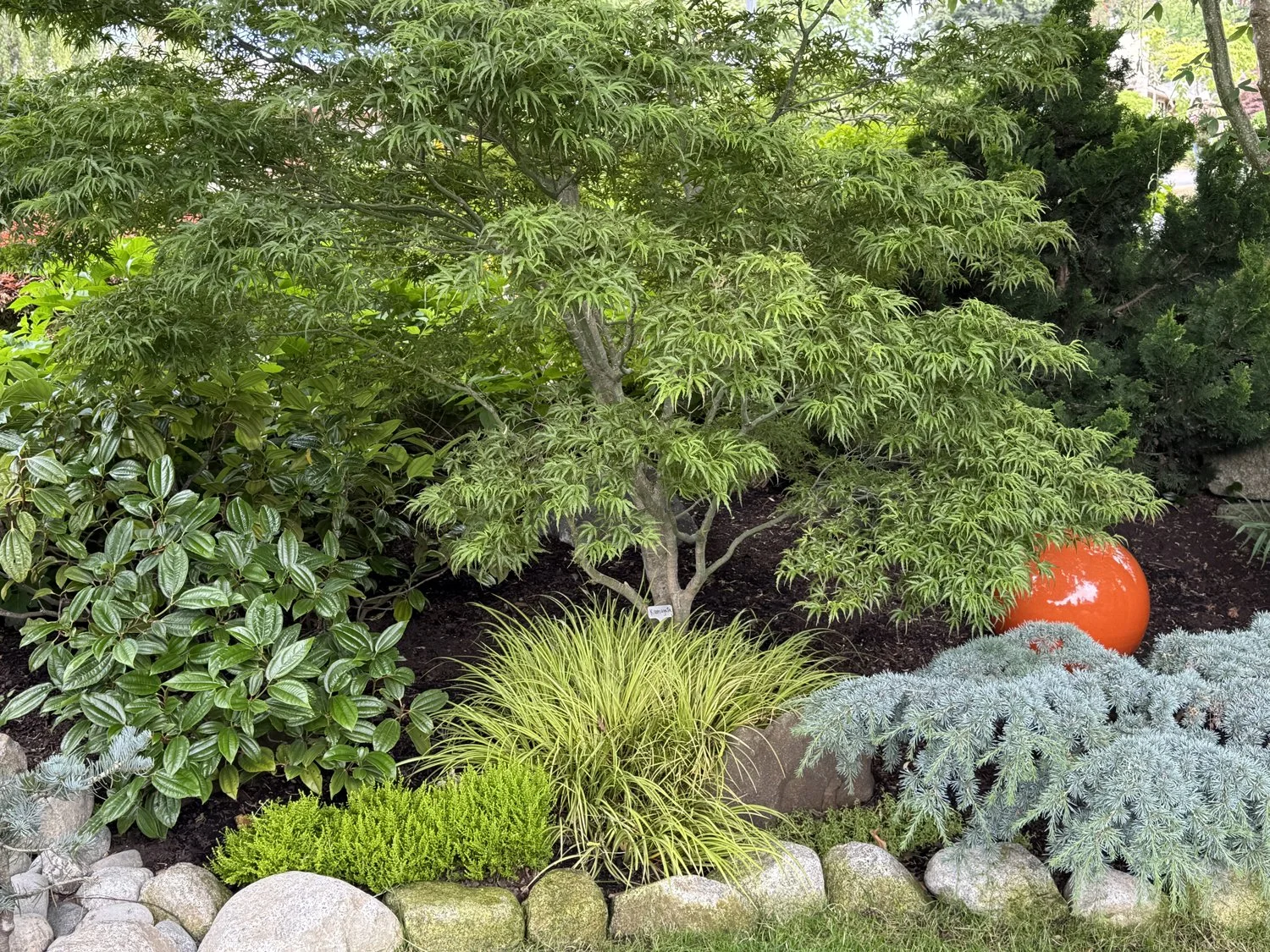
In the same garden, Orange Sedge is planted to break up and add texture to a dry creek bed. Behind the creek, shrubs with differing leaf shapes and colors create a stunning backdrop.
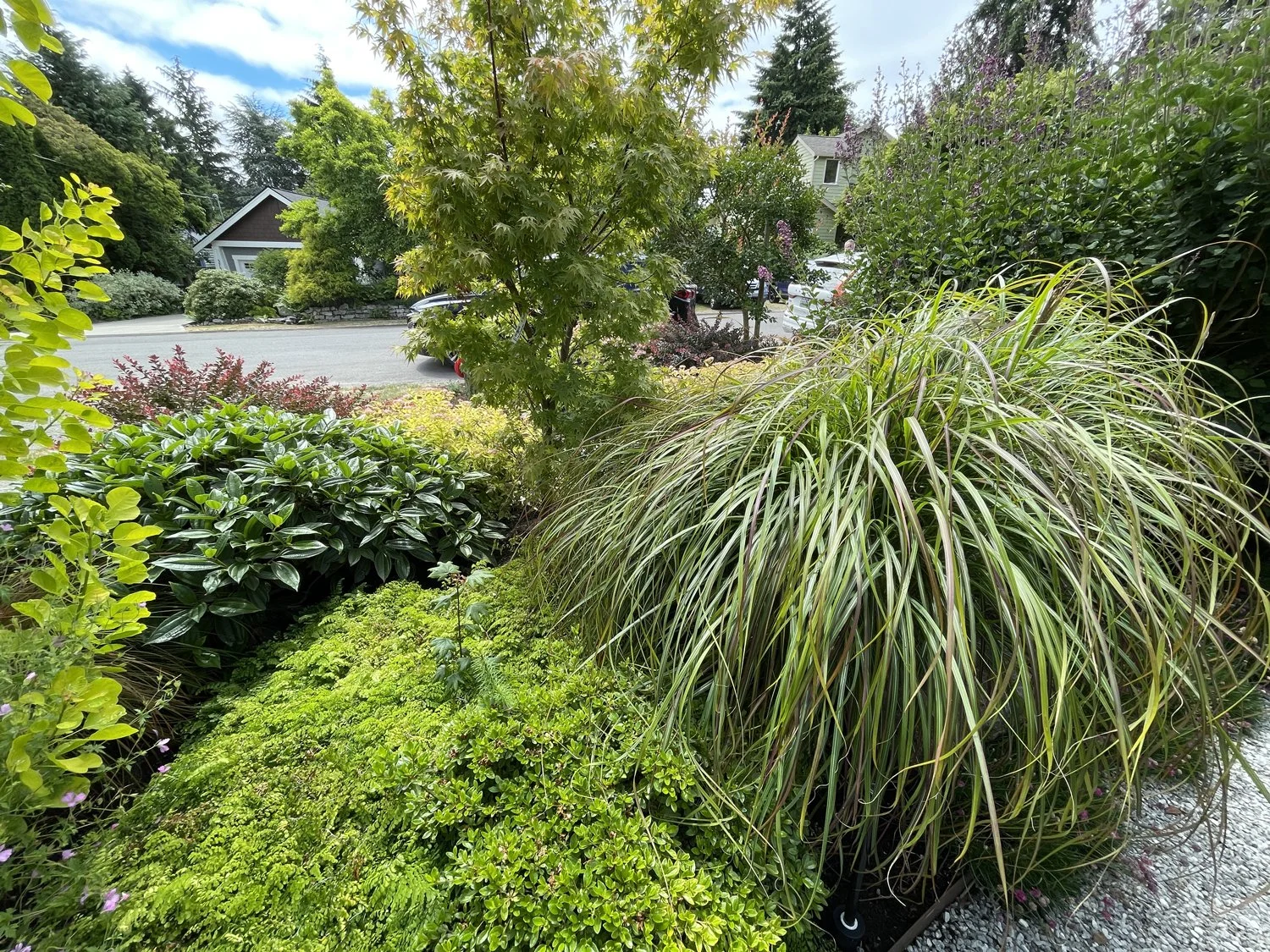
Here, Miscanthus takes center stage, supported by small-leafed shrubs and trees.
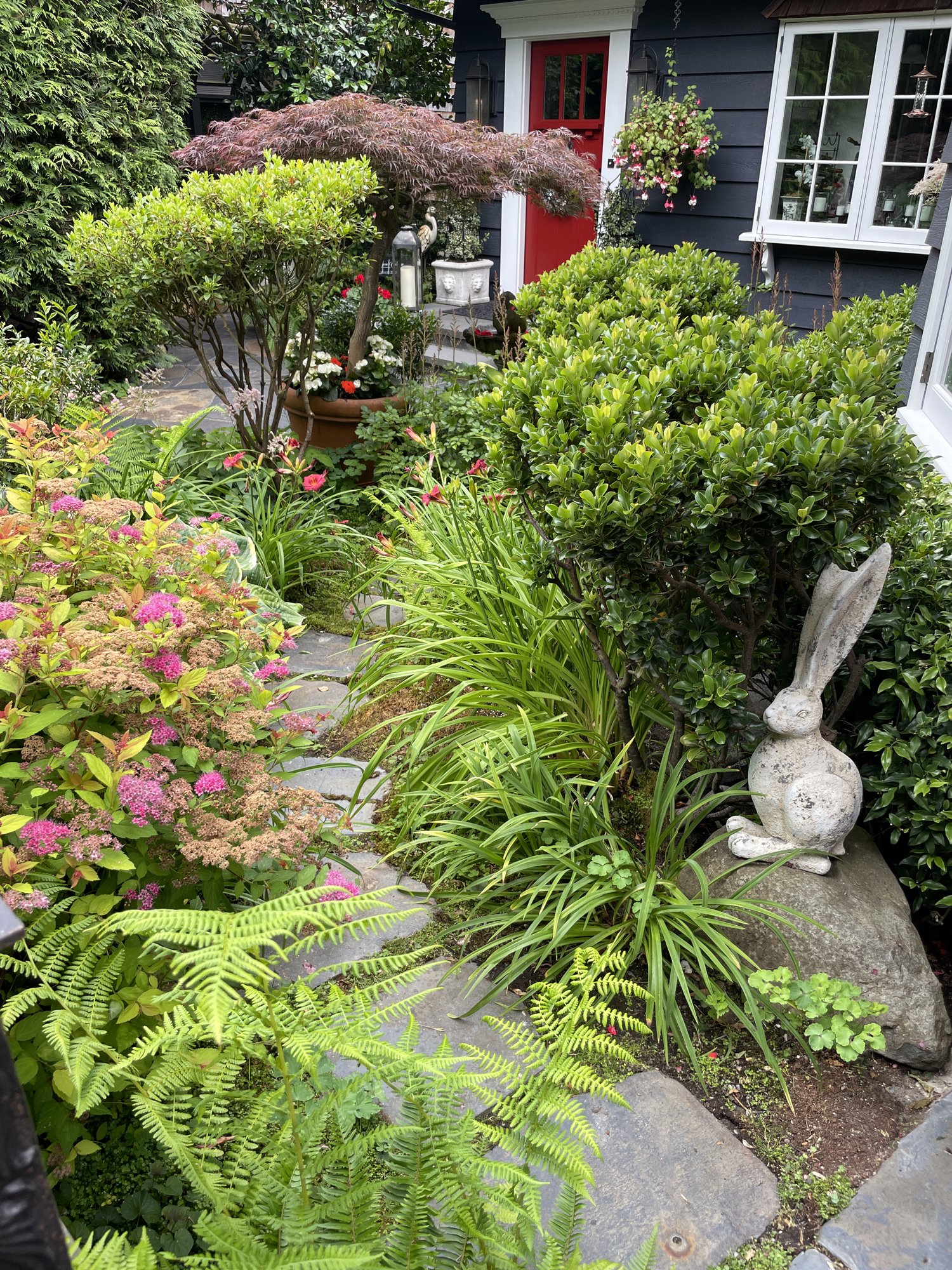
I found this path so charming. The plants gently cascade over the stepping stones without obscuring them entirely. The curving, blade-like leaves of Daylily echo the curve of the path, and Spirea’s bright pink flowers add a dash of color (and attract bees!) Trees, planted in the ground and in pots, anchor the well-structured bed - a great variety of plants in a small space.
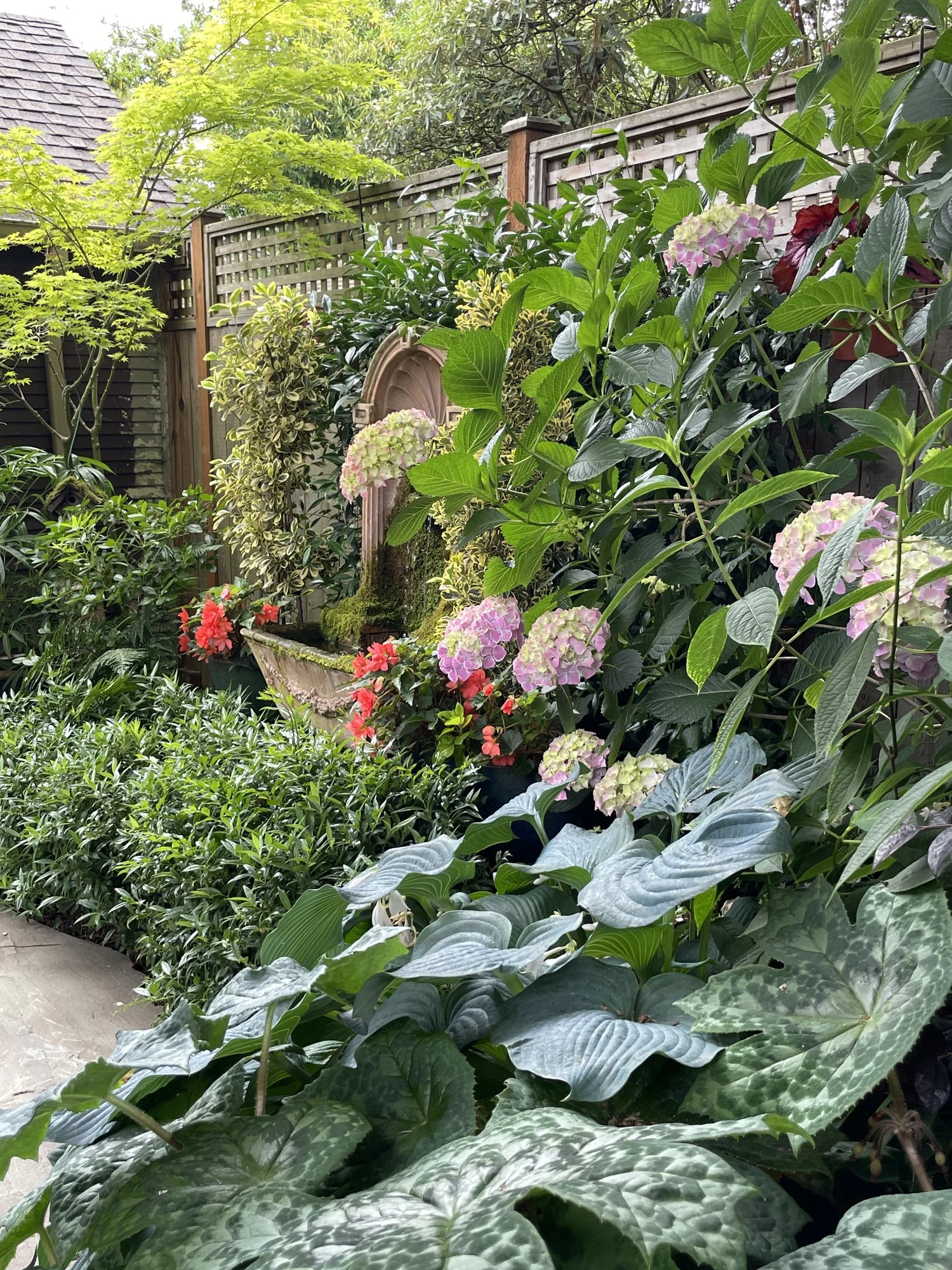
Plantings of different heights lead the eye to the fountain in the photo below. A gracefully arching Japanese Maple contrasts in color and texture with the dark green leaves and pale pink flowers of a mophead Hydrangea. A Sarcococca hedge is paired with the large leaves of Hostas and Podophyllum.
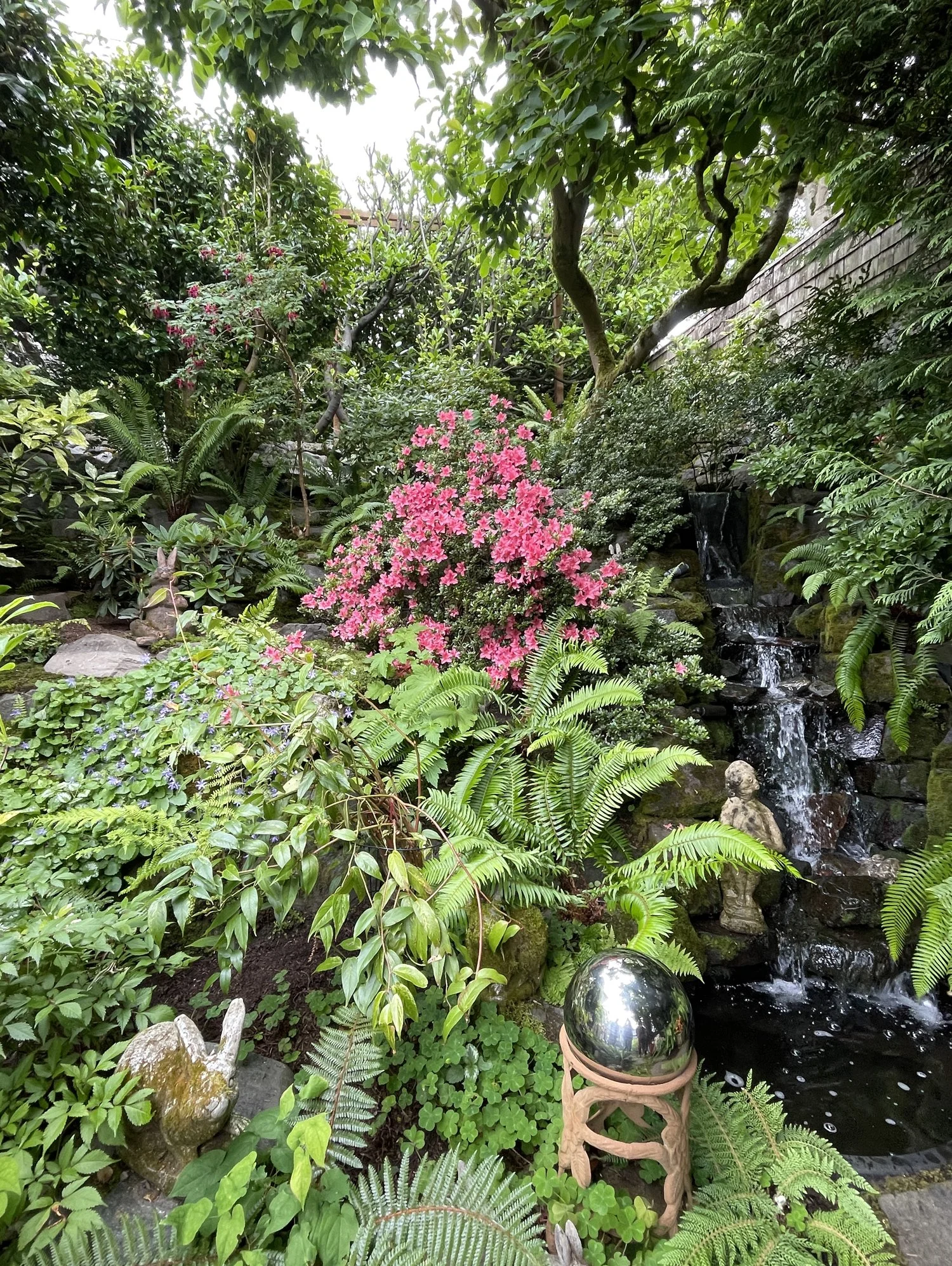
A Star Magnolia towers over the steep descent of this waterfall, whose edges are softened by layers of Ferns, Fuchsias, Azaleas, and groundcovers.
If you prefer a simplified layout with more negative space, try using mounding plants that have a tidy habit. Below, Hostas and Astilbes are repeated at the base of the trees. Contrasting textures are added with a bright groundcover (possibly Scotch Moss), and vertical layering is achieved using small trees and a large pot of Japanese Forest Grass. At the edge of the bed, the statue is framed by the long, grass-like leaves of Crocosmia, which harmonize with the container planting.
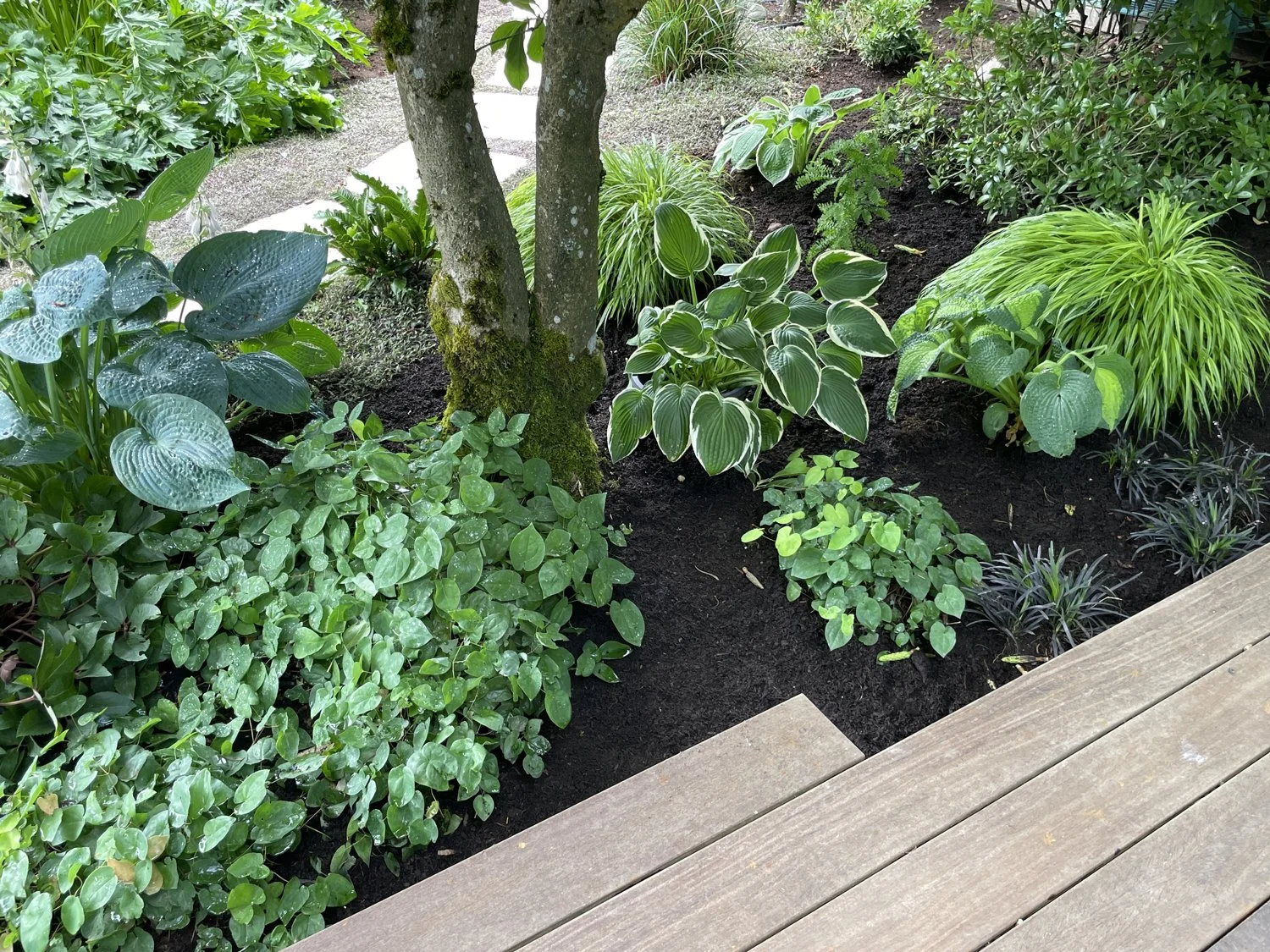
The clean modern lines of a wooden walkway clearly define the neat, mounding plants nearby, including Hostas, Epimedium, Mondo Grass, and Japanese Forest Grass.
I hope this tour of West Seattle gardens has offered inspiration for your own garden. Small touches can be essential to creating an extraordinary space. Swansons Nursery is always ready to help you achieve your garden goals, so stop by for personalized advice.
Did you know the West Seattle Garden Tour is a non-profit organization run entirely by volunteers? Over 30 years, they have donated over $800,000 to other nonprofits and featured 249 local gardens. This year, they offered grants to nonprofits such as ArtsWest, Solid Ground, and The Whale Trail. Learn more here.